Categories
Uncategorized

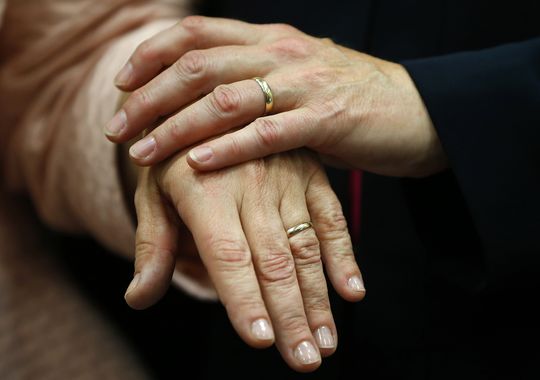
Gay divorce granted by family court judge

Despite a Kentucky law that bars the recognition of gay marriages performed where they are legal, a Jefferson Family Court judge has granted the state’s first same-sex divorce.

In the first ruling of its kind in Kentucky, Judge Joseph O’Reilly permitted the divorce of two Louisville women who were legally married in Massachusetts.

Though state law says gay marriages performed elsewhere are void in Kentucky, O’Reilly said that barring same-sex couples to divorce here violates the state constitutional guarantee that all people should be treated as equals.

In an eight-page opinion dissolving the marriage of Alysha Romero and Rebecca Sue Romero, O’Reilly also noted that Kentucky divorce law requires that it be “liberally construed” to promote “amicable settlements” of disputes between spouses.

Alysha Romero said in an interview that she was pleased she and her ex-spouse would not have to spend the time and money to return to Massachusetts, where they were wed, to end their marriage.

“I am happy the judge made the right decision,” she said.

Her lawyer, Louis Waterman, said: “I am just thrilled with Judge O’Reilly’s courage. I think he had a lot of chutzpah to do what he did.”

Douglas Haynes, who represented Rebecca Romero, said she was thrilled by the ruling but did not want to comment.

Chris Hartman, director of the Fairness Campaign, said the ruling “is just another step in the direction of full legal rights for LGBT couples.”

Gay-rights opponents in Kentucky had predicted the divorce would not be granted.

Martin Cothran, an analyst with the Family Foundation of Kentucky, told The Courier-Journal after the divorce was filed in October 2013 that the marriage “can’t either cease or continue because legally it does not exist.” And Denny Burk, an assistant professor of biblical studies at Southern Baptist Theological Seminary, said “Kentuckians have a moral and legal interest in not recognizing gay ‘marriage’ even if means denying a gay ‘divorce.’ ”

But no one, including Gov. Steve Beshear, who has defended the state’s ban on gay marriage, intervened to try to prevent the divorce. Neither Cothran nor Burk responded Monday to requests for comment, while Beshear spokeswoman Kerri Richardson said he had no comment.

The ruling comes as the U.S. Supreme Court is poised to decide Friday whether to hear cases from Kentucky and three other states in which a federal appeals court ruled that there is no constitutional right to gay marriage.

Categories
Uncategorized

With Gay Marriage on Hold, Alabama Judge OKs Gay Divorce

Same-sex marriage is on hold in Alabama, but the state now has lesbian divorce.

A judge in Huntsville allowed two women to legally end their marriage Thursday, a year after refusing their request.

Madison County Circuit Judge Karen Hall granted a divorce sought by Shrie Michelle Richmond and Kirsten Allysse Richmond, who wed in Dubuque, Iowa, in November 2012.

The women asked for the divorce on Feb. 9, the day a federal judge’s decision striking down Alabama’s gay-marriage ban took effect. Hall approved it a brief ruling that dissolved the marriage citing “incompatibility of temperament.”

A year earlier, before any judge had ruled against Alabama’s prohibition on same-sex marriage, Hall said the couple couldn’t divorce under Alabama law.

Hall’s new order didn’t mention the decision by U.S. District Judge Callie Granade, who ruled Alabama’s bans on same-sex marriage were unconstitutional. And Hall didn’t explain the reversal.

Sarah Warbelow, legal director for the Washington-based Human Rights Campaign, said such reversals have occurred in other states as same-sex marriage bans were overturned.

“The (Alabama) court is absolutely correct in determining it is bound by the federal decision,” Warbelow said.

The judge cited a five-page divorce settlement signed by both women and said Shrie Richmond, 22, could revert back to using her former name, Shrie Michelle Tinsley.

Patrick Hill, an attorney for Tinsley, didn’t return messages seeking comment Friday. But he previously said the women wanted to end their marriage in their home state even though they had to go to Iowa to be married.

“They’re both from here in Alabama, and this is where their homes, family and friends are,” Hill said last year.

Court records do not list a lawyer for Kirsten Richmond, 25, who did not contest the split-up.

Hall’s decision to grant the divorce came just days after the Alabama Supreme Court ordered the state’s probate judges to quit issuing marriage licenses to same-sex couples. Hundreds of gays and lesbians married statewide after Granade’s ruling striking down the state ban, but counties have since quit issuing licenses to same-sex couples.

Last month, the Alabama Court of Civil Appeals reversed an earlier decision and said a woman who was separated from her female partner in Georgia can pursue visitation rights in child adoption case in Alabama.

Categories
Uncategorized

For some same-sex couples, gay divorce is hard to do by Richard wolf

Allison Flood Lesh wants a divorce. She’s happy to share custody of her 17-month-old daughter.

At the moment, she can’t have either wish. Her home state of Texas doesn’t consider her to be married or a mom. Her name isn’t even on the birth certificate.

Those two problems “never even crossed my mind” when she began looking for a lawyer to get out of her same-sex marriage, performed legally in Washington in 2010. “I didn’t think it would be this hard,” Flood Lesh, 33, says. “It’s a lot bigger than I initially thought.”

For lesbian and gay couples living in states where their marriages are not recognized, divorce is proving next to impossible. They married in places such as Iowa and Massachusetts, where same-sex marriage is legal. They live in places such as Indiana and Mississippi, where it’s not.

That leaves three choices when wedded bliss reaches an abyss: move to a state where same-sex marriage is legal, most of which have residency requirements for divorce; seek to have the marriage annulled; or begin what can be a protracted court battle.

Not wishing to uproot their lives or deny their pasts, most couples opt for the courtroom. Same-sex divorce cases have cropped up in more than a dozen states, mostly in the South and Midwest.

A few divorces have been granted — sometimes during brief periods after judges strike down same-sex marriage bans and before those rulings are stayed, such as occurred in Indiana late last month. A few judges have granted divorces because they oppose their state’s gay-marriage ban or do not consider it a roadblock.

For most couples, the experience of Allison Flood Lesh and Kristi Lesh is repeated. Even when a contentious matter such as child custody isn’t involved and the couples have settled all their issues, same-sex marriage bans stand in the way.

“There’s a connection that they would like to end that they are being forced to maintain,” says Florida attorney Ellen Ware, who represents Mariama Changamire Shaw in a collaborative divorce proceeding with no outstanding issues except one — the state doesn’t recognize the marriage.

Ware sees an irony in the Catch-22 situation. “If you are opposed to same-sex marriage, it seems like you should be in favor of at least allowing same-sex people who are married to get divorced,” she says.

NO MARRIAGE, NO DIVORCE

The dead end faced by some gays and lesbians seeking to divorce illustrates the type of problems facing same-sex couples despite the progress that followed last year’s Supreme Court ruling against the federal Defense of Marriage Act.

That 5-4 decision in United States v. Windsor forced the federal government to recognize states’ same-sex marriages for purposes of offering federal benefits. It didn’t force other states to legalize same-sex marriage or even recognize those performed elsewhere.

Same-sex couples find that it’s hard to get divorced if the judge doesn’t think you’re married. Most of the court cases that have cropped up involve lesbian couples, who are twice as likely to be married as gay men.

“The relationships have ripened enough so that they don’t like each other — just like a heterosexual couple,” says Lois Liberman, a matrimonial lawyer at Blank Rome.

If they don’t like each other in most of the 31 states without same-sex marriage, their options are limited. Annulment can be messy; it doesn’t settle issues such as property division and parental rights. Residency requirements range up to a year in some of the early gay-marriage states, such as Massachusetts, New York and Iowa.

Those residency rules apply only to divorce, not to marriage. They were enacted when divorces were harder to obtain, leading plaintiffs to “forum shop” for states with more lenient laws.

Couples stuck in an unhappy marriage face a range of problems. They may have to file state and federal taxes differently. They may need their spouse’s consent for major health and pension decisions. They lack enforceable court orders for dividing assets and debts, awarding alimony and handling child custody and parenting rights.

Not to mention their social lives, which can get stuck in neutral: Dating becomes cheating. A second marriage would be bigamy.

“One minute, I’m not allowed to get divorced in Texas. Next minute, I’m an adulterer,” Flood Lesh, an oil field engineer in San Antonio, quips. “I can’t win either way.”

At least one state, Wyoming, allows same-sex divorces even though it has not legalized same-sex marriages. Others, including California, Minnesota, Delaware, Vermont and the District of Columbia, allow couples who were married there to return for divorces without meeting residency requirements.

There are occasional success stories elsewhere, usually involving couples who just want to end their marriages — not change their states’ same-sex marriage laws.

“We have heard a number of people have successfully divorced,” says Cathy Sakimura, family law director at the National Center for Lesbian Rights. “They’re not seeking the rights and benefits of marriage.”

‘THIS IS ALL VERY NEW”

Often, a simple divorce filing morphs into a case carefully monitored by national gay rights groups for evidence of cracks in the same-sex marriage bans maintained by 31 states.

Such is Nichols v. Nichols, a Nebraska divorce case that challenges the state’s refusal to recognize out-of-state gay marriages. The state Supreme Court dismissed the case last month, citing a lack of jurisdiction to hear an appeal from a lower court.

Denial of divorce rights “binds a broken relationship together against the best interest of the state, the taxpayers, the individuals and their children,” says Megan Mikolajczyk, the lawyer for Bonnie Nichols.

In Texas, two couples married in Massachusetts nearly a decade ago met opposite fates — one was granted a divorce in Austin, the other was denied a divorce in Dallas. Those cases have since been joined on appeal.

In the Lesh case, state District Judge Barbara Nellermoe ruled in April that the state’s same-sex marriage ban is unconstitutional and the divorce proceeding can continue. Her ruling was blocked temporarily by an appeals court after state Attorney General Greg Abbott argued it could create “legal chaos.”

As she pursues the divorce, Flood Lesh is focused mostly on the little girl born through artificial insemination in Texas in February 2013, identified in court papers only as “K.A.F.L.” Kristi Lesh is fighting for full custody, and the Texas Family Code provides no protection for Flood Lesh because she wasn’t married in the eyes of the state when the girl was born. She hasn’t seen her daughter since November.

“There is somewhat of a bias toward a biological parent in a same-sex relationship,” says Marilyn Chinitz, a divorce law specialist at Blank Rome. “A lot of it is the perception of the court. This is all very new.”

To Flood Lesh, that doesn’t seem fair. “She’s here because of the both of us,” she says of her daughter. “She shouldn’t have to suffer because her parents can’t get along.”

Categories
Uncategorized

From Massachusetts, lessons on gay marriage — and divorce by Richard Wolf

BOSTON — Same-sex marriage is so last decade in Massachusetts. These days, the earliest pioneers in gay and lesbian matrimony are demonstrating how to raise kids, retire — even divorce.

As the Supreme Court wrestles with what its chief justice last month labeled a redefinition of marriage, the couples who successfully challenged the Bay State’s ban on gay marriage in 2003 are juggling work and retirement, raising kids who turn down Ivy League colleges and holding joyful family reunions.

Their “family,” in this case, includes the 14 original plaintiffs in Goodridge v. Department of Public Health and their children — a generation that, according to opponents of same-sex marriage, is bound to suffer from the absence of biological, two-parent, opposite-sex households.

Don’t tell that to Avery Nortonsmith, a high school senior who recently turned down Yale to study computational neuroscience at the Massachusetts Institute of Technology. He’s proud of the role his parents, the former Heidi Norton and Gina Smith, played in the evolution of gay marriage.

“Even though I remember a time when this was new and sort of revolutionary, the idea of having two moms just seems normal to me,” Avery, 18, said last week while spending a sick day at home in Northampton, a liberal bastion in western Massachusetts. “Seeing this happen for me personally has helped give me some faith in the ability of people to affect positive change.”

The Nortonsmiths and their 12 co-plaintiffs celebrated their 11th wedding anniversaries Sunday, the date on which the Massachusetts Supreme Judicial Court allowed gays and lesbians to wed in 2004. But like many of the couples challenging other states’ gay-marriage bans, their relationships date back decades.

Their experiences — in daily living as well as legal wrangling — provide some object lessons as the Supreme Court decides whether to take same-sex marriage nationwide. A decision on cases pending from Ohio, Michigan, Kentucky and Tennessee is expected in late June.

LESSON #1: CHANGE ISN’T EASY

Julie and Hillary Goodridge had been a couple for nearly two decades when they married on May 17, 2004. Within two years, they were separated. They divorced in 2009.

The media attention, bused-in opposition and demands on their time played a role in the demise of their marriage. Yet today, the women are close friends who still give each other gifts and finish each others’ sentences.

At the moment they were recruited as lead plaintiffs by Mary Bonauto, a leader of the gay-marriage movement, Hillary was giving their daughter Annie a bath. They thought nothing of putting their adopted name first on the lawsuit.

Turns out it meant everything. The media descended — “CNN always wanted us in the kitchen, making pancakes,” Julie recalled during a joint interview last week — as did opponents who sent hate-filled fliers around their neighborhood in Boston’s Jamaica Plain section.

Even in liberal Massachusetts, state legislators rebelled against the court’s 4-3 decision, nearly getting enough votes to put a constitutional amendment banning same-sex marriage on the 2006 ballot. Having won in court, the Goodridges and their co-plaintiffs still had to win the hearts and minds of the state’s residents and lawmakers.

“We were really out there a lot, and we had a young child and full-time jobs,” Julie Goodridge, 57, recalled. She owns Northstar Asset Management, which advises clients on socially responsible investments; Hillary, 59, directs the Unitarian Universalist Funding Program. which awards social justice grants. “We were stressed.”

Today, Annie is 19, has a boyfriend and is majoring in math at Oberlin College in Ohio, one of the states seeking to have its same-sex marriage ban upheld by the Supreme Court. Last month, she wrote a column for USA TODAY recalling that as a 3-year-old, she asked her parents, “If you love each other, then why aren’t you married?”

They are divorced now but still joined in parenthood and mutual respect. “It was really important to us that we treat each other well and that Annie be first and foremost,” Hillary Goodridge said.

LESSON #2: PLANNING FOR PARENTHOOD

One of the arguments used by opponents for why states historically sanctioned only opposite-sex marriages is that only men and women can have accidental pregnancies — and therefore need incentives to marry and stay together.

Heidi and Gina Nortonsmith represent the antithesis of that. Formerly Heidi Norton and Gina Smith, the 50-year-olds named their newborns Nortonsmith even before they adopted the name as their own. The children were planned; the parents, prepared.

Although Massachusetts permitted same-sex adoption before marriage, the federal Defense of Marriage Act still imposed restrictions until it was struck down by the Supreme Court in 2013. One such roadblock was the government’s refusal to accept the new name on the children’s passports.

Gina Nortonsmith recalled traveling with a stack of papers “to prove that we all belonged to each other.” Even in liberal Northampton, friends would express concern for how Avery would be treated when he started school.

“I remember thinking, who’s going to tease him — the seven other kids in his class who have two moms?” she said.

All the planning and preparation for having children helped to ensure they would be good parents — not the sort that state marriage laws were intended to lure, Heidi Nortonsmith said.

“We try harder,” she said, while Avery kept the family’s pet bird out of hearing range.

“We try really hard,” Gina Nortonsmith agreed, while younger brother Quinn, 15 — who wants to attend Yale — asked permission to run the blender for a fruit smoothie.

He doesn’t often think about how “my parents started this,” Quinn said. Still, “it just makes me feel good seeing that so many people are getting on board with it.”

LESSON #3: DISCRIMINATION REMAINS

Rob Compton and David Wilson never could just blend in as a married couple. Compton, 66, is white. Wilson, 71, is black. They both were married to women first. Between them, they have five children.

Because they were centrally located in Boston and had employers who supported them, Compton and Wilson became public faces for the same-sex marriage movement. Not everyone appreciated what they saw, especially when the couple traveled out of state. They even received a death threat.

“We are a noticeable gay couple,” Wilson said last week while relaxing in Provincetown, the state’s gay and lesbian mecca at the far end of Cape Cod. Now retired, he often stays at their former summer home while Compton still works in Boston’s Charlestown section.

“The marriage case opened the door for a great conversation across the country,” Wilson said. “It has helped to shine a light on the areas of discrimination that were not talked about before marriage,” from jobs and housing to bullying that can lead to suicides.

The animosity they encountered while challenging the state’s gay-marriage ban more than a decade ago has faded, however, replaced by acceptance and even conversion. Now the state’s Republican lieutenant governor, a former opponent, plans to preside at the same-sex wedding of the state’s Democratic state Senate president.

Couples such as Compton and Wilson played a crucial role in the metamorphosis. “We became the example that refuted all the arguments,” Compton said. “God did not send a lightning bolt. The storm clouds all left.”

LESSON #4: THE NEW NORMAL

Perhaps the best thing that has happened to the nation’s first victorious gay-marriage plaintiffs is that they are no longer recognized, and their marriages are no longer seen as a big deal.

That’s certainly true for Ellen Wade and Maureen Brodoff, a pair of lawyers who brought the lawsuit over same-sex adoption in the 1990s before joining the gay-marriage case in 2001.

Today, they live quietly on a leafy cul-de-sac in the Boston suburb of Newton. Their daughter Kate, a graduate of Bates College in Maine, lives and works in nearby Brookline.

Despite being together since 1980, their marriage in 2004 was “a learning experience for everyone we encountered,” Wade recalled last week. But it “became part of the landscape pretty quickly…. The opposition that had been so vocal just faded away.”

As their fame subsided, Brodoff decided to initiate annual reunions, lest the seven couples lose touch with one another. Bonauto, herself married in Maine and raising twin daughters, was invited as well.

At first, the gatherings were held in November to commemorate the Nov. 18, 2003, court ruling. Eventually, they were switched to May, to celebrate the couples’ marriages on May 17, 2004.

This year presents a problem with a ready solution. Brodoff and Wade will be away, so they have delayed the reunion until July — when they hope to have something new to celebrate.

The other couples are looking forward to it. “It’s like a family reunion,” Gina Nortonsmith said, “except without the dysfunction.”

Categories
Uncategorized

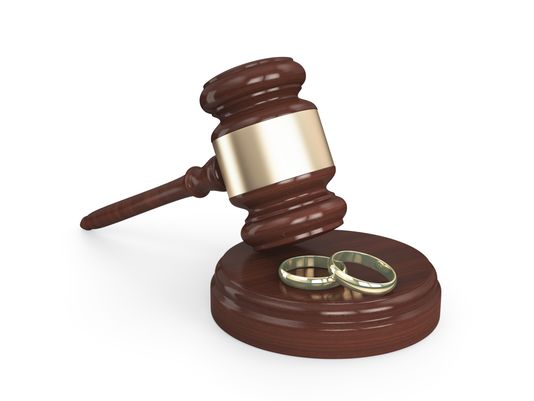
The Real Cost of Divorce – Divorce Can Cost More Than Twenty Grand

Same Sex Divorce Kevin Muir, left; Sam Ritchie, right.
Kevin Muir, left; Sam Ritchie, right.
(Photo: Ryan Pfluger)

Nancy Michaels was 40, a mother of three and a successful businesswoman when her husband of 16 years told her he wanted a divorce. Beyond the emotional cost that followed his announcement, Michaels eventually found herself shocked by the pricetag as well — more than $100,000 in legal, medical and moving costs.
“I hadn’t planned for his departure,” she said. “I wish I had…Having a safety net or money set aside is smart to do…”

How much does a divorce really cost for the average American? Every situation is different, experts say. “There’s an old saying, ‘Love is grand. Divorce is twenty grand’,” said Ginita Wall, a certified public accountant and divorce financial planner. Wall’s advice: “The best time to get divorced is when you have nothing: no kids, no property. He takes the CD player. She takes the TV. And they drive away in their leased car.”
Every year nearly 2.8 million people go through the emotional and financial trauma of divorce, said Wall, who estimates that most marriages end in divorce before the 10-year mark.

California attorney Kelly Chang Rickert estimates that a divorce “can run anywhere from $1,820 (uncontested divorce) to hundreds of thousands of dollars. There’s always Britney Spears, who paid over $1 million to her attorneys for her custody case…”

According to the U.S. Census Bureau’s latest statistics in 2006, the average American family is married, has two children, makes between $50,000 to $74,999 a year and owns a home worth about $185,000. (The numbers change based on geography. In California, homes average about $535,700, 303,000 in New York and $135,000 in Ohio.)

Using those statistics, divorce360.com estimates it could cost anywhere from a low-end of $53,000 to a high-end of $188,00 to divorce. The costs include attorneys fees, financial help and real estate costs for selling, buying or renting a home once you’ve made the decision to divorce. The costs can be significantly cheaper, as little as $1,000, if the couple — usually without children or assets — agrees to forego an attorney and use a divorce kit, which costs about $200. The cost adds up with filing fees and other court costs.

But for a a couple with an average income of $60,000 a year, at least one child and a home worth $185,000, the average cost of a divorce using U.S. Census statistics would be about $53,000. The pricetag would include short-term marriage therapy for themselves and about 20 weeks of therapy for their child. It would also include the cost to hire an attorney, sell their marital home, purchase another at a lower value for one spouse and rent an apartment in the same area for the other. For a couple making $150,00 a year with a home valued at $535,000, the pricetag increases to an average of about $188,000 for 10 weeks of therapy for themselves, 20 weeks for their child, hiring an attorney, selling their home, buying a new one and/or renting an apartment in the same area.

“While there is no true “typical” divorce, the point here is there are many hidden costs — selling your home, hiring an attorney (or two), financial advisors, a new mortgage, it all adds up,” said Cotter Cunningham, CEO of divorce360.com.

The cost of divorce increases, of course, with the amount of income the couple makes each year, the assets they’ve accumulated — from a home to retirement funds — to the number of children they have and the amount of time they’ve been married. Geography makes a big difference in the costs for emotional, financial, legal and real estate help to get through the process, experts say.

And a divorce gets even more expensive, they say, if a spouse lets their anger get in the way of letting go. New York psychotherapist Dr. Jay Granat said seen clients take as little as six weeks or as long three years.

California attorney Michael Heicklen said his typical clients are a working husband, a stay-at-home mom and two kids. They have between $300,000 and $500,000 in home equity, a pension and at least two cars. They’ve decided to end their marriage because they’re fighting about money, sex or an affair.

They underestimate the cost of a divorce, particularly the women. “…TheThe average cost to litigate a contested divorce (in California) is $45,000 per side. I’ve seen more women break down and cry in my office, after hearing my fee structure…than I can count. The men generally control the finances and use that power to try and squeeze the women financially. Many say they’d rather give it to a lawyer to teach the wife a lesson than hand it to her.”

And in the downturn in the economy has had a significant effect on divorcing couples, Heicklen said. “This financial climate is a train wreck,” he said.

Cunningham suggested mediation as an alternative. “Couples divorcing in this market should really consider ways to cut costs. Mediation can reduce costs in some situations. Do your research,” he said.

Divorce financial analyst Cynthia Anderson Thompson said the reality of today’s economy is simple: “Many spouses to be divorced stay in the same home, occupying different floors, rooms” until they can afford to make the financial investment in divorce. “It can work ok or be a stress nightmare for all, but it’s the only way to work it out financially until both spouses are up and running.”

Categories
Uncategorized

Why CoinJoin Still Matters: A Realist’s Take on Wasabi Wallet and Bitcoin Privacy

Okay, so check this out—privacy in Bitcoin feels like a moving target. Wow! It’s one of those topics that makes people either nod knowingly or run scared. My instinct said it was getting better, though actually, wait—there are new twists that complicate things. On the surface, coin mixing (CoinJoin-style coordination) looks like a magic eraser for traceability. But that’s too neat. In practice, there are trade-offs, quirks, and some ethical gray zones you should know about.

Here’s what bugs me about the conversation online: people treat privacy like a binary. Nope. It’s a spectrum. Really? Yes. Some tools push you left on that line, some barely move the needle. Initially I thought broader adoption of CoinJoin would make deanonymization nearly impossible, but then I saw clustering heuristics evolve and realized the arms race is real. On one hand, coordinated mixing amplifies anonymity by creating shared transaction histories. On the other hand, pattern recognition and poor operational security can give investigators footholds. Hmm… somethin’ about that bugs me.

CoinJoin at its heart is a cooperative transaction. Short simple idea: multiple users pool inputs and outputs in a single on-chain transaction to break the direct one-to-one link between sending and receiving addresses. Wow! That’s the gist. But if you want to treat it like religion, you’re missing the nuance. There are different implementations, different assumptions, and different threat models.

A hand-drawn map of Bitcoin transactions illustrating how CoinJoin groups multiple inputs and outputs

Wasabi Wallet: A Practical, Privacy-First Option

If you want a real-world tool that’s been battle-tested, Wasabi Wallet is one of the main players. I’m biased, but it’s one of the few wallets I trust to take privacy seriously without turning everything into arcane ops. https://sites.google.com/walletcryptoextension.com/wasabi-wallet/ explains the project and its features—worth a look if you’re curious. Wasabi implements CoinJoin with Chaumian CoinJoin rounds and integrates features like coin control and deterministic wallets so you can manage anonymity sets more deliberately. Seriously? Yes—but that doesn’t mean automatic safety.

Be honest with yourself. CoinJoin improves plausible deniability and blurs transaction linkage. But it’s not a silver bullet that hides everything. My first impression was almost naive optimism; over time my view matured. Something felt off about expecting perfect privacy from a single tool. There are operational practices that matter: when you mix, why you mix, and how you move funds afterward all influence your privacy outcomes.

Let me be concrete—without giving a playbook for evasion. CoinJoin changes the statistical signals analysts rely on, making certain tracing heuristics less effective. It reduces the weight of address reuse and single-owner clustering in many analyses. Yet, if you publicly link your identity with a post-mix address, or consolidate mixed coins with unmixed funds, you reintroduce linkability. So, privacy is social, technical, and behavioral all at once.

Okay—real talk: the bigger the anonymity set, the better. Short sentence. The more participants and the more indistinguishable the outputs, the harder it is to attribute coins. But there are trade-offs. Mixing rounds can have waiting times. Fees matter. Network patterns and timing attacks are a thing. And, importantly, using privacy tools can attract attention in some regimes—and that’s not theoretical. I’m not 100% sure how every jurisdiction treats this, and I’m not offering legal advice, but you should be aware.

On a technical note—Chaumian CoinJoin, which Wasabi uses, relies on blinded signatures to unlink inputs and outputs during coordination. Medium sentence. That design avoids a central escrow and mitigates certain deanonymization risks compared to naive mixing. Longer: though it reduces single points of failure, it still requires you to manage your coins thoughtfully and to accept that perfect anonymity is impossible; you can only incrementally reduce the probability of linkage while increasing plausible deniability.

Here’s a little anecdote—oh, and by the way, this is paraphrased from conversations at meetups. I once watched a newcomer run a CoinJoin, then immediately sweep everything into a single service account because it was “cleaner.” Whoa! That wiped out most of the privacy gains. Moral of the story: tools are only as effective as the habits that accompany them.

So what should you realistically expect? Short answer: measurable improvement, not immunity. Use CoinJoin to reduce linkability. Use it as one layer in a defense-in-depth strategy. Use it and then maintain compartmentalization. Long sentence now to tie it together: because privacy degrades with each additional link or consolidation step, sustaining privacy is about process management over time, not a single transaction you check off your list and forget about.

Risk assessment matters. If you operate in a sensitive jurisdiction, mixing might raise suspicion even if it technically increases privacy—there’s a social cost sometimes. Also: threats evolve. Analytics groups adapt. Regulators can push exchanges to implement more aggressive heuristics. So, diversify your approach and keep learning. I’m biased toward self-custody and privacy-preserving defaults, but I’m also pragmatic about limits.

FAQ

Does CoinJoin make my Bitcoin untraceable?

No. CoinJoin increases ambiguity and reduces traceability by breaking simple input-output links, but it doesn’t make funds untraceable. Maintain other good operational practices and consider legal and personal risks.

Is Wasabi Wallet safe to use?

Wasabi is a reputable open-source project with a strong privacy focus, but “safe” depends on how you use it. Keep your software up to date, understand the UX, and avoid linking identities to addresses you want private. I’m not endorsing foolproofness—just saying it’s one of the better tools out there.

Will mixing draw attention?

Possibly. In some contexts, using privacy tools can be more conspicuous than not. That doesn’t mean you shouldn’t use them; it means weigh risks and benefits for your situation and remember—privacy is about choices, not secrecy for its own sake.

I’ll close with this: privacy is a practice. It’s messy. It requires habits, patience, and an attitude that accepts imperfection. Wow—sounds dramatic, but it’s true. If you care about keeping your financial life private, treat CoinJoin and tools like Wasabi as essential parts of a toolkit, not magical solutions. On the bright side, community-driven tools keep improving, and that’s hopeful. Hmm… I keep thinking there are more angles to this—maybe next time we’ll dig into threat models and multisig interactions, though for now, try not to break your own anonymity with careless moves.

Categories
Uncategorized

Why Hardware Wallets Still Matter for DeFi, Trading, and Staking — Even When Everything Feels Fast

Whoa! The crypto world moves at warp speed. I get why you might want to trade, stake, or dive into DeFi right from a browser. But hold up—there’s a gap between convenience and custody that bites people every week, and somethin’ about that bugs me.

Early on I chased yield and clever UX. My instinct said “fast wins.” Initially I thought that browser wallets would solve most problems, but then realized they introduce attack surfaces that hardware isolation simply doesn’t. On one hand you get seamless dApps and instant swaps; on the other, there are private keys floating in memory during the very moment you approve a trade, and that’s a messy tradeoff.

Seriously? Yes. The convenience avalanche has made people complacent. Many don’t want the friction of a device. They skip backups. They click through warnings. And then they wonder why funds disappear—very very important to remember backups.

Here’s the thing. Hardware wallets are not a magic bullet. Yet they dramatically reduce risk when used correctly, especially for DeFi activities, active trading, and long-term staking. I’ll be honest—I still use a small set of hot tools for quick trades. But my significant positions live on hardware that signs transactions off-device. That separation saves me sleep.

A hardware wallet sitting next to a laptop showing a DeFi dashboard

How hardware wallets change the security game

Short answer: they isolate private keys. Medium answer: keys never leave the device during signing, so malware on your computer can’t exfiltrate them. Longer thought: because a hardware wallet enforces user-confirmation on-screen, an attacker needs physical access or a very elaborate social-engineering setup to authorize high-value transactions, which raises the bar substantially and turns many common hacks into low-probability events.

Okay, so check this out—when you connect a hardware device to a DeFi site, the dApp prepares a transaction and asks the wallet to sign it. The wallet shows the recipient, the amount, and gas estimates. You see the details on-device and decide. This tiny, seemingly tedious step is the choke point where security happens.

On top of that, modern hardware wallets support app-level policies: contract whitelists, transaction scoping, and smart contract interactions that require explicit consent. That matters for DeFi because a signed approval can give unlimited spend rights if you’re not careful, and oh boy, I’ve seen people approve unlimited tokens out of habit…

My instinct still nags me when a swap interface asks for blanket allowances. Initially I clicked “approve” like everybody, but after losing access to a small position to a rogue contract, I changed habits. Now I tighten approval amounts and use per-use approvals where possible. This simple behavior change lowers exposure to permission-grant exploits.

DeFi integration: practical tips for using hardware safely

First, use a dedicated device for your large holdings if you can. Seriously, mix your tools: small quick-trade funds on a hot wallet, and core holdings on hardware. That balance feels right to me. Secondly, always verify contract addresses on the device display when possible. If the device supports it, confirm function names and parameters. If it doesn’t, pause and double-check.

Now, I’m not 100% perfect here. I’ve had moments where I thought the ledger state matched my browser and it didn’t. (oh, and by the way…) That’s why I prefer tools that show human-readable details on-device. A device that lets me see “Approve 0xAbc… to spend 1000 TOKEN” beats a tiny checkbox any day.

Pro tip: ephemeral wallets for DeFi experiments are your friend. Use a throwaway seed with minimal funds when testing new protocols. If the experiment works, you move funds via hardware-signed transactions to your main stash. This two-step approach wastes a minute but saves heartbreak.

Also, gas optimization matters. I’ve had trades fail because I underpriced gas. That led to stuck approvals and confusing UI states. The device will sign what you ask it to sign, so make sure the transaction you see is actually the one you intend to submit.

Crypto trading with hardware wallets — yes, it’s possible

Trading directly from a hardware wallet? It sounds clunky, but it’s doable. Many bridges and DEX aggregators integrate with wallets that support Ledger-compatible signing flows. You route your trade, review on-device, and confirm. It adds friction, but friction is a feature when security is the priority. My trades take longer now, though I don’t regret the changes.

For active traders, using dedicated hot accounts for day-to-day moves and moving profits to a hardware-secured long-term wallet nightly can be an elegant pattern. It respects the speed traders need while keeping the crown jewels offline. This hybrid model is what I recommend to friends in the US trading scene who’ve asked for a low-stress workflow.

Hmm… some custodial platforms offer hardware-backed custody services. Those are useful if you trust the provider, but evaluate the custody model carefully—custody is about trust frameworks. If custody is third-party, you still have counterparty risk. Hardware wallets remove that counterparty element entirely, and for many of us, that matters more than convenience.

Staking and validators: where hardware skins the risk

Staking often requires signing messages regularly or running a validator node, depending on the chain. For non-custodial staking, hardware wallets enable you to maintain control of keys while delegating or signing staking actions safely. For validators, cold-staking with offline key stores for consensus keys and hot keys for signing ephemeral messages is a best practice.

I’ll be blunt: validator mismanagement is a real thing. I once inherited a node config that was sloppy and nearly caused slashing. That experience made me very conservative about key separation. Cold keys offline. Hot keys minimal. Redundancy without unnecessary exposure.

Also consider reward harvesting patterns. Automating claim-and-swap routines with scripts is tempting, but each automation step that requires signing should be gated through hardware confirmation when the amounts matter. That extra click is annoying sometimes, but it prevents automated drain in many attack scenarios.

Common questions about combining hardware wallets with DeFi, trading, and staking

Can I use a hardware wallet with most DeFi platforms?

Yes. Most modern dApps support browser-wallet standards that pair with hardware devices through bridges or wallet connectors, and you can interact safely as long as you verify transactions on-device. If the device shows only generic info, pause and review off-chain details first.

Is it practical to trade from a hardware wallet?

Practical if you’re willing to accept a bit more latency and clicks. Many seasoned traders use hybrid models: hot funds for frequent trades and hardware for long-term capital. It reduces stress and cuts the “what if” scenarios when markets get wild.

How do I stake with hardware keys without risking slashing?

Use key separation: keep consensus keys offline and manage validator operations with minimal-exposure hot keys. Backups and clear recovery plans are crucial. And yes, test your recovery on small amounts so you know the drill before going big.

Finally, if you want a practical place to start experimenting with safer flows, check out ledger—their app helps bridge hardware devices to the DeFi and staking world, and it grew on me once I stopped treating security as a checkbox and started treating it like a habit.

I’m biased toward devices because they’ve saved me real money and stress. That said, no silver bullet exists. Keep a healthy suspicion, test, and backup. Hmm… and don’t forget: simple habits—unique seeds, secure backups, cautious approvals—compound into real protection over time. It ain’t glamorous, but it works.

Categories
Uncategorized

Picking the Right Validator and Managing NFTs on Mobile: My Take on Solana’s Wallet Scene

Okay, so check this out—when I first started dabbling in Solana, I was mostly overwhelmed by the sheer number of validators out there. Seriously? Hundreds? My instinct said, “Pick a random one and hope for the best,” but that felt… off. Something about blindly delegating my stake without vetting just didn’t sit right. Plus, juggling NFTs on mobile wallets seemed like a whole different beast. I mean, how can you trust your digital collectibles on a tiny screen without the right tools?

Here’s the thing. Validator selection on Solana isn’t just about picking the biggest or flashiest node. No, it’s a bit more nuanced. You gotta look at commission rates, uptime, and reputation—stuff that requires a bit of digging. And as someone who’s been through the learning curve, I can tell you, it’s easy to get lost in the noise. (Oh, and by the way, my first few choices tanked because I ignored uptime stats.)

Wow! The whole mobile wallet scene adds a layer of complexity. It’s not just about storing tokens; it’s about staking, governance, and managing NFTs—all in one place. That’s why I eventually gravitated toward the solflare wallet. It felt like the few and far between wallets that actually got it right—smooth mobile UX combined with robust validator interaction and NFT management. But initially, I was skeptical. Mobile wallets, historically, have been clunky or insecure.

So, I did some tests. First impression: intuitive UI, which was a relief because I’m not exactly a tech wizard. But wait—there’s more beneath the surface. The wallet offers seamless staking options that let you pick validators based on real-time performance data. That’s a game-changer, seriously. I don’t have to jump between websites or spreadsheets. Everything’s in one place, which, honestly, is pretty rare.

Initially, I thought mobile wallets were just for quick trades or holding small amounts. But then I realized that the staking and NFT features here are quite advanced. On one hand, this convenience is fantastic, though actually, it does raise questions about security when handling NFTs, especially rare ones. Something about having my prized digital art on a phone kinda made me uneasy at first—like, what if I lost my device? But the wallet’s backup and recovery options eased that worry a bit.

Screenshot of Solflare wallet showing validator stats and NFT collection on mobile

Now, let’s talk NFTs for a sec. Managing collections on mobile has always been a pain point. Many wallets just display your tokens but don’t offer much beyond that. However, the solflare wallet surprisingly handles NFT viewing and transactions smoothly. I could browse my collection, check metadata, and even stake tokens—all without switching apps. That’s a slick integration that made me go, “Okay, this is legit.”

What bugs me, though, is how some validators are still a black box to many users. I get it—there’s overwhelming info, but transparency and education are lacking. I wish wallets would do a better job breaking down what validator performance really means for everyday users. The solflare wallet tries, but sometimes the jargon still sneaks in. Maybe they’ll improve that soon.

How I Approach Validator Selection on Mobile

Here’s my personal workflow, if you’re curious. First, I open the solflare wallet and check the validator leaderboard. It’s not just a list; the wallet gives me uptime percentages, commission fees, and recent performance trends. Then, I cross-reference a few names with community feedback—forums, Twitter, you name it. I don’t blindly follow the top spots because sometimes they have high commissions that eat into rewards.

Hmm… sometimes I also consider validators with smaller stakes. They might offer better returns and help decentralize the network. It’s a bit of a balancing act. And yes, I admit I have a bias toward validators that actively engage with the community. That human touch matters to me because it signals commitment beyond just profits.

Once I settle on a few candidates, I delegate small amounts to test their reliability. If I see consistent rewards and no downtime, I bump up my stake gradually. This trial-and-error approach isn’t perfect, but it’s been working so far. The wallet simplifies this process, which is why I keep coming back to it.

Really? The fact that I can manage all this on my phone, without lugging around a laptop or fiddling with desktop apps, feels like a win. The solflare wallet’s staking dashboard is straightforward, and I like how it flags potential issues like validator downtime or slashing risks. These little warnings help me sleep at night, honestly.

But, I’ll be honest, I do miss some advanced analytics that desktop tools offer. Hopefully, mobile wallets like solflare will keep evolving to bridge that gap. The landscape is moving fast, and sometimes mobile solutions lag behind. Still, the progress so far is impressive.

Why NFT Management on Mobile Matters More Than Ever

Something else I noticed: NFT collectors on Solana are growing by the day. I mean, it’s not just art anymore; it’s gaming assets, music, event tickets—you name it. Having a wallet that can handle all that on the go is crucial. The solflare wallet’s NFT tab lets me preview my assets quickly, transfer them, and even stake associated tokens without hassle.

Here’s where it gets interesting. Some wallets treat NFTs like an afterthought. You get a list, maybe a thumbnail, and that’s it. But with solflare, the experience feels more curated. You get detailed metadata, links to creators, and even options to display or hide certain collections. That level of control is rare and much appreciated.

On a deeper level, managing NFTs on mobile wallets ties into the broader story of crypto usability. If you can’t easily access or interact with your digital assets wherever you are, the whole decentralized promise kinda falls flat. Being able to stake tokens linked to NFTs—say, for governance in a DAO or in-game perks—adds layers of utility that most wallets overlook.

Wow! I didn’t expect mobile wallets to be this feature-rich. This makes me wonder about the future of crypto wallets as all-in-one hubs. Maybe someday, managing your entire Solana portfolio, including staking, NFTs, and governance, will be as effortless as checking your social feed.

Okay, so here’s a quirk: sometimes the wallet UI feels a bit too dense, especially when juggling NFTs and staking tabs. I find myself clicking back and forth more than I’d like. But that’s a small tradeoff given the functionality. And honestly, it’s nice to see a wallet that tries to pack so much power into a mobile-friendly design.

Final Thoughts: Is Solflare the Mobile Wallet to Beat?

Initially, I thought mobile wallets were just for casual users or quick trades. But after spending decent time with the solflare wallet, I’m seriously reconsidering that stance. It’s robust enough for staking, transparent enough for validator choices, and intuitive enough to manage NFTs without losing your mind.

That said, nothing’s perfect. Security always lingers in the back of my mind, especially on mobile devices that can be lost or compromised. The wallet’s backup options are solid, but I still recommend cold storage for truly valuable assets. Also, validator education within the app could be better. More plain English, less jargon—that’d go a long way.

So yeah, if you’re on Solana and want a mobile wallet that balances ease with power, give the solflare wallet a look. I’m biased, but it feels like one of the few wallets that genuinely understands what users want: straightforward staking, real NFT support, and a clean mobile experience.

Who knows? Maybe in a year or two, managing your entire crypto life from your pocket will be the norm. For now, wallets like solflare are paving the way, imperfections and all.

Categories
Uncategorized

Elvis comment blistering, turbocharged chronicle of your Queen Biopics

During the 2025 GRAMMYs, Cropper is selected regarding the Best Modern-day Organization Album Class to have the fresh aptly entitled Friendlytown, filed having a mix of long-time collaborators and some brand-new face, together with her recharged as the Steve Cropper & the new Midnight Hour. Friendlytown’s 13 tracks try familiar, digestible and you will straight-ahead rockin’ — the sort of tunes you’d be very happy to pay attention to inside a good local diving.

Categories
Uncategorized

How I Pick Validators, Manage SPL Tokens, and Use a Browser Wallet on Solana

Whoa! I dug into Solana validators last week after my wallet’s staking rewards suddenly dipped. Something felt off about the node distribution and the fee patterns I was seeing on-chain. Initially I thought it was just transient congestion, but then I started to trace stake activation timings, validator commission changes, and unexpected vote account behavior across several epochs, which painted a more complicated picture. Here’s the thing: validator selection matters for your staking returns and for the security of your tokens.

Seriously? Yes — and not in the abstract way people toss the word decentralization around. Your choice affects slashing risk, how quickly rewards are issued, and even NFT mint reliability when networks get busy. On one hand validators with huge stake pools can be more stable and offer predictable payouts, though actually they centralize influence and may throttle transactions during peak loads, and on the other hand smaller operators might yield slightly higher rewards but carry operational risk if they’re poorly maintained. So you need clear, measurable criteria — not mere gut reactions.

Hmm… Start with basics: uptime history, commission rates, and whether the operator publicly posts contact info and telemetry. Look for validators that run up-to-date software and that regularly engage with community tooling like Grafana or Prometheus dashboards. A validator that frequently lags on vote confirmations or that spikes in missed slots during software upgrades is a red flag, and figuring that out sometimes requires combing through raw block explorer logs and Discord threads where operators announce maintenance windows or report incidents. Also consider commission flexibility — some nodes lower fees to attract stake but then raise them once they have a large pool.

Wow! Delegation choices are also about long-term incentives for both you and the operator. If you plan to stake for months, a slightly lower commission that stays steady is often better than boom-and-bust fee strategies. There’s also the nuance that some validators participate in prioritized transactions or have arrangements with block producers, which can influence your transaction ordering and NFT mint success rates even though those relationships aren’t always transparent to the average delegator. That lack of transparency really bugs me as a user who cares about fairness.

Validator dashboard showing uptime and commission rates

A practical wallet workflow with solflare

Okay, so check this out— I use a browser extension wallet for convenience, and if you’re on Solana you probably do too. A good extension should make staking, token management, and NFT viewing straightforward without sacrificing security. I’ve been testing different extensions and one that stood out for me both for UX and staking flow was solflare; it let me switch validators in a couple clicks while showing historical APR, commission history, and the validator’s identity—so I could weigh trustworthiness against returns in real time. I linked it here because I’m recommending a practical tool, not because I’m being coy.

I’m biased, but extensions vary in how they handle SPL tokens and NFTs, and that matters if you collect art or run a project. Some wallets hide token accounts behind advanced menus, which is confusing and can lead to accidental transfers. Security-wise, browser extensions are a different threat model than hardware wallets — they’re more convenient and often integrate with dApps directly, but they require careful permissioning and an understanding of what you’re signing when you approve a transaction, especially for programs interacting with SPL tokens. So if you’re storing rare NFTs, consider pairing an extension with a hardware key for high-value moves.

Whoa—wait. I initially thought high APR was the goal, but that ignores compounding, downtime, and exit friction. Actually, wait—let me rephrase that: total realized yield is what counts, not headline APR. You should model scenarios where a validator increases commission, has maintenance downtime, or suffers a partial slashing event — even if slashing is rare on Solana, the compounding effect of missed epochs can meaningfully change returns over time, particularly for smaller stakes. One practical tip: spread stakes across a few well-vetted validators rather than putting everything on a single, shiny operator.

Really? Yes — diversification reduces single-point-of-failure risk and smooths rewards. Also check whether validators are geographically distributed and whether they run redundant infrastructure. If you’re managing SPL tokens too, be aware of mint authorities and who controls token metadata; poorly managed mints can get frozen or altered, and that matters for both collectors and projects issuing tokens as part of a product offering. My instinct said to keep an eye on on-chain governance signals and community reputation when choosing operators.

Here’s what bugs me about the space: folks chase the highest APY like it’s a clearance sale, and they ignore things like community responsiveness or long-term operator behavior. I was at a coffee shop in Brooklyn when I realized I had been juggling three wallets and missing a lot of context — somethin’ about that felt sloppy. Initially I assumed the UX differences were cosmetic, but then I found that small UI choices change how often people rebalance or notice outgoing approvals, which in turn affects security. I’m not 100% sure of every edge case, and I’m still learning, but that human factor matters more than we admit.

FAQ

How many validators should I stake to?

Two to four is a pragmatic sweet spot for many users: it diversifies risk without spreading rewards so thin that monitoring becomes a chore. If you have a very large stake, consider more nodes and staggered exit plans.

Do browser extensions handle SPL tokens safely?

They can — but treat them like a front-line tool. Use hardware keys for big transfers, audit token approvals before signing, and prefer wallets that surface advanced details about SPL token accounts and program interactions.