Categories
Uncategorized

Designing LP Portfolios: Asset Allocation, Rebalancing, and Gauge Voting for Custom DeFi Pools

Whoa! I started tinkering with custom pools three years ago and my first reaction was: this is going to be simple. It wasn’t. Seriously? No—Liquidity provision in DeFi is simple in concept but fiendishly nuanced in practice, especially once gauge voting and dynamic weights enter the picture and change incentives in ways that spreadsheet backtests rarely capture.

Okay, so check this out—asset allocation for pools is an exercise in aligning three things: risk appetite, fee capture strategy, and governance mechanics. My instinct said concentrate on correlated assets to lower impermanent loss, but practice nudged me toward hybrid approaches that lean on gauge-driven emissions to offset slippage. Initially I thought equal-weighted pools were the safest default, but then I realized that gauge weight shifts and bribes can make underweighted assets suddenly very attractive—or very toxic.

Here’s what bugs me about one-size-fits-all advice: it treats liquidity as static capital. It’s not. Pools breathe, incentives change, tokenomics morph, and if you’re not designing allocation with those dynamics in mind you end up chasing returns instead of engineering them. I’m biased, but I prefer frameworks that bake in governance signals because somethin’ about aligning incentives feels more durable to me.

Dashboard view of a multi-asset liquidity pool with gauge weights and performance metrics

Core principles: assets, weights, and incentives

Start with assets. Pick a base of highly correlated pairs for lower IL, then layer in diversifiers that offer higher fee potential or governance value. Medium-term thinking matters—are you aiming for steady small fees or occasional outsized gains from concentrated volatility? On one hand, stable-stable pools minimize IL but also compress fees; though actually, if gauge emissions favor that stable pair, yield can be compelling.

Weighting is the next lever. Concentrated liquidity looks sexy for active managers, but wide buckets are forgiving for less frequent rebalancers. Try hybrid weights: a core 60/40 or 70/30 that favors the lower-volatility asset, plus a small tranche (10-20%) in a tactical slot for governance or opportunistic tokens. That tactical slot can be rotated based on gauge voting outcomes, ve ownership, and bribe signals—small enough to limit IL risk, but big enough to capture asymmetric upside.

Gauge voting changes the game. Platforms with gauge mechanics create a second market—voting power. If your pool’s emissions depend on votes, you must think like both a portfolio manager and a DAO participant. Engage in voting and bribe markets if applicable. If you choose not to, recognize you’re ceding yield to others who do. (oh, and by the way…) I use balancer as an example of tooling and UI that helps manage these dynamics, though the principles apply across many composable DeFi platforms.

Practical allocation patterns

Short-term traders: favor concentrated positions and high-fee pairs. Medium-term LPs: balanced allocations with a tactical slot for gauge play. Long-term stakers: prioritize low-IL, high-governance exposure. Hmm… those categories blur, but they help you pick default presets.

A concrete starting template I use personally: 60% correlated/stable assets, 25% market-friendly pair with decent volume, 10% governance/token exposure for gauge voting, and 5% cash or stable for opportunistic moves. This is not perfect. It’s a starting point you can stress-test under different volume and volatility regimes.

Rebalancing rules: set thresholds, not dates. Rebalance when weights deviate by X% or when cumulative impermanent loss crosses a rollback threshold. Rebalancing on a cadence (weekly, monthly) is easier but often more expensive. The rule-based approach is more tactical and often cheaper, but requires monitoring or automation. I’m not 100% sure about perfect thresholds—market behavior shifts—so start conservative and iterate.

Tactical layer: gauge voting and bribe markets

Gauge voting is both carrot and sword. If your pool secures more emissions, your effective yield rises. But to win votes you may need ve tokens, which lock capital, or to engage in bribe markets, which consume treasury. On one hand, locking increases long-term alignment and can stabilize emissions; on the other, it reduces liquidity flexibility. Decide based on your time horizon and risk tolerance.

When engaging with bribes, calculate the net APR after bribe costs. Often the math is obvious—if emissions plus fees minus bribe < your opportunity cost, don't bother. Yet sometimes bribes are structurally inefficient and offer outsized short-term gains; those are the plays for nimble, risk-tolerant allocators. There's also reputational risk if you're representing a fund or DAO—bribe-heavy strategies can feel grubby and may attract scrutiny.

Gauge allocation should be coordinated across your organizational units. For single-wallet managers it’s simpler: lock ve and vote where you benefit most. For DAOs, propose transparent rules: allocate X% of emissions-derived yield to treasury, Y% to LP rewards, Z% to strategic bribes. This avoids last-minute scrambles and ensures your pool’s weight aligns with longer-term strategy.

Risk controls and monitoring

Risk controls are boring but very very important. Set max exposure per token, per pool, and per gauge. Use on-chain alerts for sudden weight changes or oracle anomalies. Automate withdrawals if a pair’s volume collapses or if a governance proposal threatens tokenomics. Small automation investments pay off when things go sideways.

Don’t forget counterparty risk. Pools that combine tokens with centralized bridges or wrapped assets carry extra failure modes. Try to avoid one-off exotic tokens unless their reward justifies custody complexity. And document your assumptions—if a token’s peg behavior or redemption path is uncertain, treat it conservatively.

Operational checklist before you commit capital

1) Verify token pair correlation and simulate IL under historical vol. 2) Check fee tiers and expected volume at different price ranges. 3) Review governance: are emissions stable or likely to be redirected? 4) Decide on gauge strategy: lock ve, vote, or stay passive. 5) Set rebalancing triggers and automations.

These are straightforward but people often skip one. Skipping governance analysis is my pet peeve—if emission schedules shift, your whole allocation goes haywire. I’ll be honest: this part keeps me awake more than APY tables do.

FAQ

How big should my gauge voting slot be?

Small but meaningful. 5–15% of your LP capital is enough to capture many gauge-driven opportunities without overexposing you to IL. If you have governance-heavy goals, scale up cautiously and offset with correlated assets to reduce volatility.

Can bribes justify otherwise weak pool fundamentals?

Sometimes—particularly in bootstrapping phases. But bribes are temporary. If the pool lacks organic volume, emissions and bribes are stopgaps. Use bribes to bootstrap, then pivot to sustainable fee-driven strategies before emissions taper.

How often should I rebalance multi-asset pools?

Use threshold-based rebalancing tied to weight drift or IL exposure rather than calendar dates. For many LPs, monthly checks plus automated threshold triggers strike a good balance between costs and control.

Alright—here’s the takeaway, short and honest: build around a core of low-IL assets, reserve a tactical slot for gauge and governance plays, automate sensible risk controls, and treat bribes as temporary accelerants rather than long-term crutches. Something felt off the first time I optimized purely for APY; revenues collapsed when emissions shifted. Learn from that.

My final thought: DeFi is still the Wild West in many corners. Be pragmatic, not dogmatic. Test small, document your rules, and expect to adjust—often. If you keep governance in the picture and design allocations that can flex with changing incentives, you won’t just chase returns—you’ll engineer them.

Categories
Uncategorized

Why I Stuck With a Multi-Chain Wallet That Actually Simulates Transactions

Whoa! That first moment felt like a lightbulb.
I was knee-deep in DeFi and my brain was fuzzy from switching chains.
Switching networks, approving random token spenders, and watching gas vanish—ugh.
But then I tried something that changed my pace and my trust, and it stuck with me.

Seriously? Yes.
A multi-chain wallet that simulates transactions before you sign them can save you real headaches.
I remember sending a trade that looked fine, though actually the route had a hidden slippage trap—very very costly.
My instinct said somethin’ was off, but I shrugged it off at first.
That shrug cost a chunk of ETH (lesson learned, bleh).

Initially I thought a wallet extension was just an interface for keys, but then realized it can be a smart guard.
On one hand a wallet must be lightweight and fast; on the other hand it should act like a careful gatekeeper, checking trades and calls for you.
So I started testing wallets by how well they simulated and explained transactions, rather than by UX or color schemes.
I’ll be honest—I geek out over the nitty-gritty of RPC responses and call traces.
And when a wallet shows you the internal token flow, that gives you an edge most users don’t get.

Here’s the thing.
Transaction simulation isn’t just about estimating gas.
It’s about replaying the call graph, spotting token approvals, and catching reentrancy-like behavior before you hit send.
When a wallet shows you which contract will receive tokens and how much, you avoid approving an infinite allowance to a rug.
(oh, and by the way… this kind of visibility reduces social-engineering risk too.)

My workflow changed slowly, not overnight.
I started running a quick sim first, then checking the trace, then approving if everything looked sane.
That extra twenty seconds saved me from one sloppy swap and two suspicious approvals.
So yeah—I’m biased, but having that simulation step feels like a safety belt.
It also helps when you’re bouncing across chains and bridging assets, because the simulation shows reverts and slippage traps in advance.

Screenshot of a transaction simulation showing token flows and gas estimate

Where a good multi-chain extension wins

Okay, so check this out—if you’re serious about moving funds across EVM chains without sweating, you want an extension that explains, simulates, and isolates.
rabby wallet does this by letting you preview internal transfers and contract calls, which matters more than flashy themes.
It also supports multiple accounts and hardware wallets, so you can keep cold key security and still get the UX comforts of an extension.
On top of that, a built-in permission manager (revoking allowances fast) changes your threat model.
If you treat approvals like kitchen knives, simulation is your inspection before you hand someone one.

Hmm… you might wonder how simulations work under the hood.
Most good ones replay the tx against a node or a forked state, then report what would happen, including logs and internal calls.
That replay catches reverted calls, unexpected token transfers, and MEV sandwich vectors in many cases, though not all.
Actually, wait—let me rephrase that: a simulation reduces uncertainty, but it doesn’t make you invincible.
On-chain race conditions and frontrunning still exist, but seeing the call trace gives you context to make an informed decision.

Security wise, a wallet that isolates extension permissions is a must.
Don’t give every site blanket access to your accounts.
Grant per-site permissions and keep an eye on active sessions, because attackers often piggyback on lax permission models.
Also, connecting hardware wallets through the extension means you get human confirmation for each signature, and that human check prevents many auto-approval scams.
That interplay between UX convenience and hardware-backed verification is where I place my bets.

On the multi-chain front you also want sane defaults.
Auto-switching network prompts are fine, but auto-signing is not.
A wallet should warn you before switching to networks where gas token nuances bite you (I’m looking at you, wrapped tokens).
And when bridges are in play, the simulation should show both sides: the lock on source and the mint or release on destination, otherwise you miss counterparty risk.
These little details stack up; they feel small until they cost you real value.

Common questions users ask

Can a simulation fully protect me from scams?

Nope. It reduces the attack surface by exposing hidden transfers and reverts, though it cannot replay off-chain social-engineering or future MEV manipulations perfectly.
Use simulations as one tool among many: hardware wallets, allowance hygiene, verified contracts, and cautious UX habits.

Does simulation slow down signing?

Sometimes there is a small delay while the wallet queries a node or forks state, but the milliseconds are worth the insight.
If speed is your only priority, then you’ll accept more risk—I’m not judging, but most pros choose safety over reckless haste.

Categories
Uncategorized

Want to install MetaMask in Chrome? What really matters (and what most guides gloss over)

Why does installing a browser wallet feel both trivial and potentially risky? Most short how‑tos stop at “click install, create a password.” That’s useful, but it misses the mechanisms that make MetaMask (a browser extension wallet for Ethereum and compatible chains) behave the way it does — and it overlooks trade‑offs that determine whether it is the right tool for your needs. If you are arriving via an archived PDF landing page and seeking the extension, this piece explains how MetaMask works in the browser, corrects common misconceptions, and gives practical decision heuristics for safer installation and everyday use.

Start with a sharp distinction: installing MetaMask is about two different relationships. One is with the software you install (the extension code that interacts with web pages). The other is with the secrets you create or import there (your private keys or seed phrase). Conflating the two causes most of the beginner mistakes. The rest of this article looks at both relationships — how the extension operates, where it is strong, where it breaks, and what to watch next.

MetaMask fox icon representing a browser wallet extension for managing Ethereum accounts and interacting with web3 sites

How MetaMask works in Chrome: mechanism, not magic

At a mechanism level, MetaMask is a Chrome extension that injects an API (window.ethereum) into webpages. When a decentralized application (dApp) asks to read your account or sign a transaction, that request goes through the extension. You approve or deny it inside MetaMask’s popup, and only after your explicit approval will the extension forward signed transactions to the network via its configured RPC provider.

Two consequences flow directly from that mechanism. First, the extension is the gatekeeper: any site that can reach the injected API can request account access. That is powerful but also why the browser surface matters — malicious or badly written sites can spam permission requests or craft deceptive transaction prompts. Second, the extension mediates connectivity to the blockchain: it does not itself run a full node in your browser. Instead, it uses configured remote RPC endpoints to read chain state and broadcast transactions; by default these are third‑party providers. That choice affects privacy and reliability.

Myth-busting: three common misconceptions

Myth 1 — “Extensions can’t be compromised if downloaded from the Chrome Web Store.” Not true. The Chrome Web Store reduces some risk but does not eliminate it: extensions update, maintainers can change code, and attackers have targeted extension accounts or supply chains before. A safer mental model: treat the store as a convenience, not a security guarantee. Review recent update notes, use official vendor links where possible, and limit the permissions you grant.

Myth 2 — “MetaMask stores funds for you like a bank.” Wrong framing. MetaMask stores private keys locally (encrypted) and exposes signing functionality in the browser. That means custody is with the user: if the seed phrase is lost or exfiltrated, MetaMask cannot reverse transactions. Conversely, MetaMask can make recovery simpler than raw key files, but the single recovery seed remains the central vulnerability. Understand the boundary: MetaMask is not insurance; it is a software agent that makes key use convenient.

Myth 3 — “Using MetaMask automatically protects my privacy.” Only partially. Because MetaMask connects to public RPC endpoints and the browser leaks telemetry and cookies, your on‑chain activity can be correlated to browser fingerprints. Using a custom RPC, privacy‑preserving endpoints, or additional tools (separate browser profile, Tor, or dedicated hardware) changes the equation, but none are perfect. Recognize where the leakage vectors are: network provider, extension telemetry, browser state, and site-level requests.

Trade-offs that matter when installing MetaMask on Chrome

Pick three practical trade‑offs you face when choosing MetaMask as your daily driver:

Convenience vs. compartmentalization — MetaMask’s tight in‑browser integration makes dApp interaction frictionless: connect, sign, and go. But that same convenience concentrates risk in the browser context. A heuristic: use a separate browser profile (or a dedicated Chromium-based browser) for web3 activity and keep ordinary browsing separate.

Usability vs. custody security — MetaMask offers a friendly UI for managing multiple accounts and networks, including easy token displays. However, if you need stronger custody guarantees (defense against remote malware or phishing), combine MetaMask with a hardware wallet; MetaMask can act as a software interface while signing happens on the hardware device. That reduces convenience slightly but materially improves security.

Default RPC vs. privacy and resilience — The default nodes MetaMask points to are designed for broad compatibility. If you are privacy-conscious or require higher uptime, configure a trusted RPC provider or run your own light client. Running your own node is the most robust option, but it increases complexity and resource needs.

Installation checklist and decision heuristic

Don’t treat installation as a single action. Follow a quick checklist and a simple heuristic: “Is this session low, medium, or high risk?” Low risk (browsing, price checking): use a non‑custodial read‑only setup or a new browser profile. Medium risk (small trades, interactions): install MetaMask, seed stored offline, use password manager and consider a separate profile. High risk (large transfers, token allowances): use MetaMask with a hardware wallet and verify every transaction on the device screen.

Concrete steps near installation: verify the extension source (use official links, like the archived installer page when that is your trusted source), create a strong local password for the extension, write down the seed phrase on paper (not in cloud notes), and never paste it into a site. After setup, turn on phishing detection in MetaMask and limit automatic approvals — always review transaction details (gas, recipient, method signatures).

Where MetaMask breaks — limits and unresolved issues

There are boundary conditions to be explicit about. First, browser-level compromise (e.g., malicious extension, browser exploit) can bypass MetaMask’s UI protections if the attacker controls the DOM or key event flow. Second, social engineering remains the dominant failure mode: attackers can use fake “connect” prompts, cloned dApps, or malicious swap pages to trick users into signing dangerous transactions. Third, regulatory or infrastructure changes (e.g., RPC providers changing access policies) can alter usability without warning.

Experts broadly agree the user interface can improve the clarity of on‑chain actions (e.g., showing human‑readable names for contract calls). They also debate how much metadata MetaMask should retain for user convenience versus privacy. These are design trade‑offs without simple solutions: increased convenience often means storing more data that could leak; stricter privacy harms usability for novices.

Practical next steps and a safe download pointer

If you want a single place to begin from a preserved source, use the archived PDF installer instructions provided here for reference and verification during setup: https://ia600107.us.archive.org/17/items/metamsk-wallet-extension-download-official-site/metamask-wallet-extension-app.pdf. That document can help you cross‑check filenames and expected behaviors against what you see in the Chrome store, but remember: an archive page is documentation, not a security certificate. Always verify the extension’s publisher name and review recent updates before installing.

Heuristic summary you can reuse: treat MetaMask as software that eases key usage, not a custodian; compartmentalize web3 browsing; use hardware signing for high‑value operations; and assume that phishing will be the most likely attack vector you face.

What to watch next

Three signals deserve attention if you use MetaMask or any browser wallet in the US context: changes in browser extension store policies (which affect update review and publisher trust), evolution of popular RPC providers (shifts in latency or privacy guarantees), and interface improvements that make transaction intent more explicit. Each signal changes the trade‑off landscape: for example, better on‑device transaction previews reduce the value of hardware wallets for everyday checks, while stricter store policies reduce but do not eliminate supply chain attacks.

Also watch for broader ecosystem moves: increased use of L2 networks changes gas patterns and signing frequency; more dApps adopting wallet‑agnostic standards changes the connection flow; and growing regulatory attention to crypto custodial practices could reshape UX and compliance obligations for wallet developers. These are plausible scenarios, not certainties; they depend on technical choices and policy decisions.

FAQ

Is it safer to install MetaMask from the Chrome Web Store or from an archived installer?

The Chrome Web Store provides convenience and some review controls, but it is not infallible. An archived installer (like the PDF linked above) is useful for verification and instructions, but it is documentation rather than a live security guarantee. Best practice: use the official store for installation while cross‑checking publisher details and recent update notes against trusted documentation.

Should I use MetaMask’s built‑in account or connect a hardware wallet?

Use built‑in accounts for low‑value, high‑convenience tasks. For medium‑to‑high value operations, connect a hardware wallet so signing happens on the device. Combining MetaMask’s UI with hardware signing preserves usability while reducing key‑exposure risk on the host machine.

What if I lose my seed phrase after installing MetaMask?

If you lose the seed phrase and did not back it up elsewhere, you cannot recover the wallet. MetaMask cannot restore access. For that reason, store the seed offline (paper or metal backup) and consider splitting the phrase across secure locations if you manage substantial funds.

How can I reduce phishing risk when using MetaMask in Chrome?

Work from a dedicated browser profile, avoid clicking unsolicited links, verify domain names carefully, scrutinize transaction details before signing, and enable MetaMask’s phishing detection. Consider hardware wallets and limit token allowances to minimize the impact of a single signed approval.

Categories
Uncategorized

Which risks are real when you click “Sign”? A practical myth-busting guide to transaction simulation, WalletConnect, and gas optimization for DeFi users

Do you really understand what you sign when a dApp asks permission — and which parts of that process protect you from front-running, malicious approvals, or getting stuck with a failed swap? Start there: many users conflate wallet convenience with risk mitigation. The truth is layered. A wallet that makes DeFi workflows smooth can still leave important attack surfaces exposed unless you understand how simulation, cross-chain gas flows, and connection protocols interact with custody and MEV (maximal extractable value) threats.

This article dispels three common myths: that transaction signing is binary (safe/unsafe), that WalletConnect always reduces risk, and that paying higher gas is the simplest defense against front-running. Instead, I’ll explain mechanisms, trade-offs, and practical checks that a sophisticated DeFi user in the US should apply before approving or broadcasting transactions. You’ll leave with a reusable mental model for pre-sign risk assessment and an operational checklist to reduce exposure without sacrificing DeFi composability.

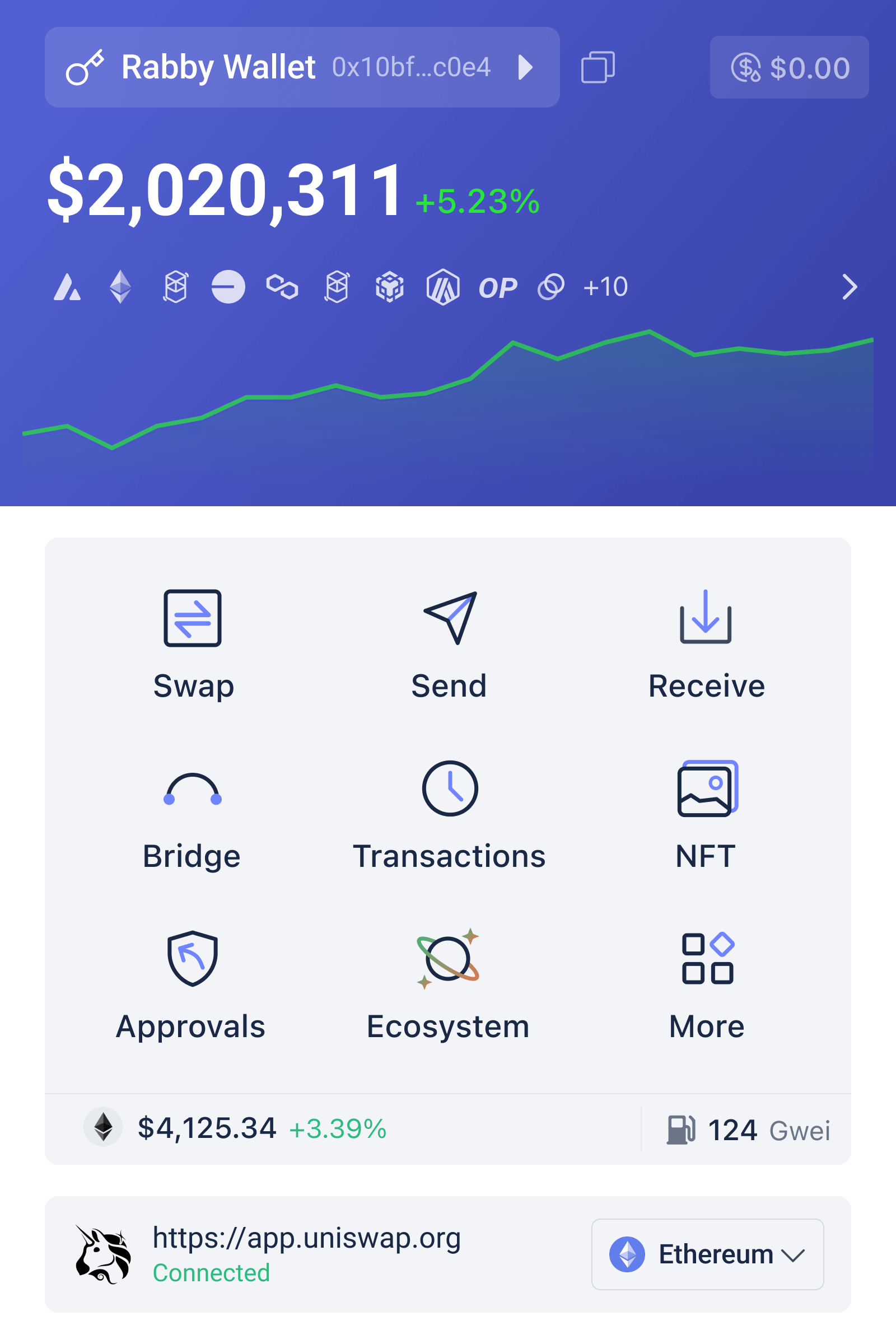
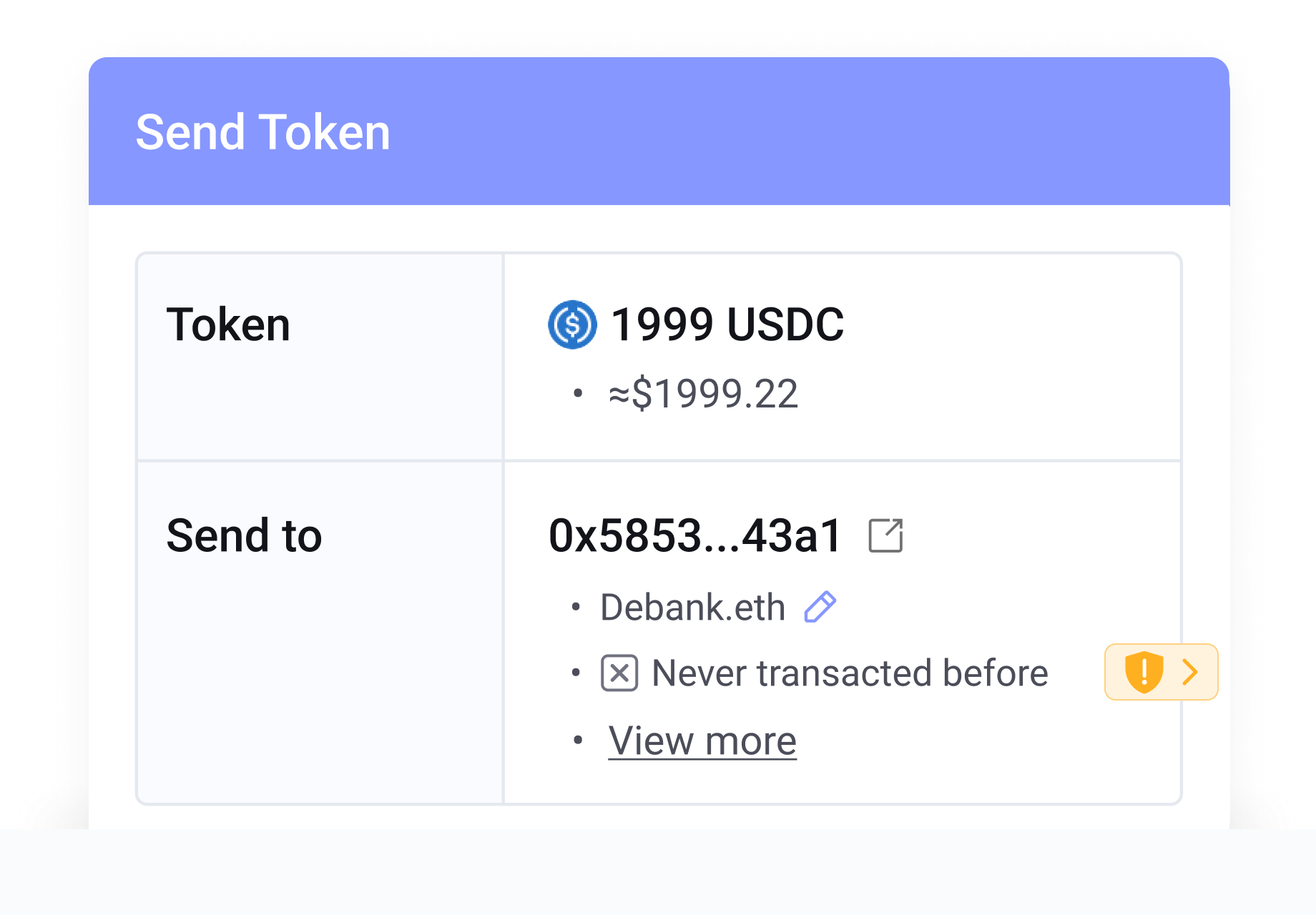
Rabby wallet logo; demonstrates a wallet UI used to preview transaction simulations and approval revocation

Myth 1 — “If my wallet simulates it, the transaction is safe.”

Why the myth persists: simulation feels like a crystal ball. A simulation engine that replays a transaction against current on-chain state and shows balance deltas gives a concrete preview — and that is valuable. Rabby’s transaction simulation engine, for example, shows estimated token balance changes and detailed contract interactions before you confirm, which cuts the problem of blind signing significantly.

Where it breaks down: simulations are deterministic replays against a snapshot of state. They do not remove risks that arise between simulation and inclusion in a block: MEV sandwich attacks, priority gas auctions, or state changes from other transactions can alter outcomes. Simulations also depend on the RPC node and the gas-price model used; a different mempool view or another relayer can reveal previously unseen interactions.

Decision-useful heuristic: treat simulation as necessary but not sufficient. Use it to detect obviously malicious intent (unintended token drains, approvals to unknown contracts, or impossible balance deltas). Then layer protections: set slippage tightly when swapping, use approval revocation tools proactively, and consider hardware-wallet signing for large-value trades to add a human pause that catches suspicious UX patterns.

Myth 2 — “WalletConnect equals safer remote signing.”

Why the myth persists: WalletConnect decouples mobile wallets from desktop dApps and avoids browser-extension exposures, so many users assume it’s inherently safer. It is safer in some respects: it avoids browser extension man-in-the-middle vulnerabilities and encourages mobile-first UX patterns that can make approval details more visible.

Why it’s not a panacea: WalletConnect is a transport layer. It moves signed payloads across protocols but does not alter the underlying transaction semantics — malicious contracts and problematic approvals remain problematic. Additionally, establishing a session introduces session-management risks: accidental long-lived pairings or scanning a malicious QR can grant persistent access until the session is revoked. Also, cross-chain flows complicate the threat model: a dApp might prompt an approval on one chain and an execution on another.

Practical rule: treat every WalletConnect session like a long-lived permission. Use wallets that show full pre-transaction scans and simulate actions, and revoke sessions or approvals you no longer need. Rabby’s built-in approval revocation and pre-transaction risk scanning reduce exposure by combining transport hygiene with contract-level scrutiny.

Myth 3 — “Gas optimization is only about cost.”

Why the myth persists: optimizing gas often looks like a pure cost trade-off: lower gas = cheaper transaction. For DeFi, gas choices interact directly with security and execution risk. Setting gas too low can produce stuck or failing transactions that leak information (e.g., reveal intent), while setting it too high can accelerate inclusion in a hostile mempool where sophisticated bots can re-order or sandwich your tx.

Mechanism clarity: gas price and gas limit determine how miners/validators (or sequencers on rollups) order and include your transaction. MEV actors monitor mempools and use higher-fee transactions or bundle strategies to extract value. Conversely, private relay options, flashbots-style bundles, or sponsored gas flows can reduce exposure but often require infrastructure or wallet-level support.

Tools and trade-offs: Rabby’s Gas Top-Up tool addresses a practical operational problem—having the right native token on the right chain—by letting you send gas across chains so you can complete necessary on-chain actions. That reduces the operational risk of stranded funds. But it does not eliminate MEV risk. For MEV-sensitive trades, consider private relays or offline negotiation (where available), split orders to reduce sandwichable windows, or use limit orders when the protocol supports them. Each choice trades immediacy for lower extractable value.

Putting it together: a four-step pre-sign checklist for DeFi power users

1) Contextual scan: Before signing, read the simulated outcome. If the simulation shows approvals or balance changes you didn’t intend, cancel. Rabby’s pre-transaction risk scanning adds a second layer by flagging known risky contracts or nonexistent addresses.

2) Approval hygiene: Prefer exact-amount approvals or one-time approvals for swaps. Use a revoke tool right after an interaction if the dApp doesn’t require ongoing allowance. The revoke tool built into wallets like Rabby reduces long-lived exposure to malicious or compromised contracts.

3) Gas strategy: Decide whether you need immediacy. For time-sensitive arbitrage or market-taking trades, pay for priority—but if you’re worried about MEV, route via private relays or split your orders into smaller, less sandwichable sizes. Use cross-chain Gas Top-Up features when you lack native gas rather than bridging tokens unsafely.

4) Connection discipline: Treat WalletConnect or browser extension pairings as sessions. Revoke unused sessions, verify the dApp domain in your wallet UI, and prefer wallets with automatic chain switching to avoid manual selection errors that can lead you to sign on the wrong network.

Limitations, trade-offs, and what still keeps security researchers awake

No single layer is foolproof. Simulation engines rely on the honesty of RPC providers and accurate mempool visibility; hardware wallets secure key usage but cannot prevent poor UX or social engineering; cross-chain gas features reduce operational friction but add another silo where configuration mistakes can occur. Rabby’s focus is explicitly EVM-compatible chains—so if your strategy uses non-EVM rails, you’ll need separate tooling and different threat models. Finally, open-source code and audits matter, but they do not immunize against new contract-level exploits, which appear unpredictably.

Watch signals: adoption of private mempool relays, improvements in bundle APIs, and broader wallet-level support for MEV-mitigating flows. These are the levers that could materially reduce extractable value for ordinary users if they become standard and well-integrated into wallets and dApps.

Where Rabby fits this risk model

Rabby combines multiple defensive primitives that matter to the checklist above: local private-key storage that reduces server-side exposure, transaction simulation and pre-transaction scanning to avoid blind signing, built-in approval revocation, Gas Top-Up to solve cross-chain operational gaps, and hardware wallet and Gnosis Safe integrations for institutional custody patterns. For US-based users focused on EVM DeFi activity, that mix reduces several common attack vectors — but it does not erase systemic risks like sophisticated MEV or fundamental protocol bugs. If you use Rabby, treat its features as an integrated toolkit rather than a turnkey guarantee; use the tools actively.

If you want to explore a wallet that places simulation and pre-sign transparency at the center of the UX, see how it works in practice at rabby.

FAQ

Q: Does transaction simulation prevent MEV front-running?

A: No. Simulation shows expected outcomes against a snapshot of state; it does not affect mempool ordering or prevent other actors from reacting after your signed transaction is broadcast. Use private relays or bundling when available and combine simulation with conservative slippage and staged execution strategies.

Q: Is WalletConnect safer than a browser extension?

A: It reduces some browser-extension-specific attack surfaces but introduces session and transport trade-offs. Safety depends on the wallet UI’s clarity, session hygiene, and whether the wallet performs pre-transaction scans and simulations.

Q: When should I use Gas Top-Up instead of bridging tokens?

A: Use Gas Top-Up when you lack native gas on a target chain for a required operation and want to avoid bridging user-value unnecessarily. It’s an operational convenience that reduces friction; it does not change slippage or MEV risk for the underlying transaction.

Q: Are hardware wallets necessary if I use a wallet with strong simulations?

A: Hardware wallets add a valuable human-and-device boundary for signing. Simulations reduce blind signing, but hardware devices reduce the risk of key exfiltration and provide a deliberate confirmation step that catches UX surprises.

Categories
Uncategorized

지갑 설치 순간: Rabby 데스크톱 확장과 모바일 앱을 한국 사용자 관점에서 이해하기

지갑을 새로 설치하려고 했는데, ‘네트워크 수수료가 너무 높다’, ‘이 사이트가 내 자산을 스왑하려고 한다’ 같은 경고 메시지를 본 적이 있습니까? 한국에서 DeFi를 이용하거나 여러 체인을 오가며 자산을 관리하려는 사용자라면 지갑 선택과 설치 과정은 단순한 클릭 이상의 의미가 있습니다. 초기 설정의 작은 실수 하나가 자금 손실로 이어질 수 있고, 반대로 올바른 구성은 공격 표면을 줄여주며 거래 편의성을 크게 높입니다.

이 글은 Rabby 지갑의 데스크톱 확장(브라우저 확장)과 모바일 앱 설치 과정, 작동 메커니즘, 보안·운영상의 트레이드오프를 한국 사용자 맥락에서 설명합니다. 목표는 기능 나열이 아니라 ‘왜 어떤 설정을 택해야 하는지’와 ‘어디에서 깨지기 쉬운지’를 판단할 수 있는 사고틀을 제공하는 것입니다.

Rabby 지갑 인터페이스: 멀티체인 계정 관리와 트랜잭션 검토 화면을 보여주는 예시 이미지

무엇을 설치하고 왜 그것이 다른가 — 핵심 메커니즘

Rabby는 멀티체인 지갑으로서 브라우저 확장과 모바일 앱을 통해 키 관리(비밀키/시드 구동)와 dApp 상호작용, 스왑 라우팅 보조 등을 제공합니다. 메커니즘 관점에서 중요한 부분은 ‘키의 위치’와 ‘트랜잭션 서명 워크플로’입니다. 데스크톱 확장은 브라우저 내부에 시드 암호화본을 보관하고, 웹 페이지가 트랜잭션을 요청하면 사용자에게 각 항목(어떤 토큰, 얼마, 가스 한도 등)을 명확히 보여준 뒤 로컬에서 서명합니다. 모바일 앱은 종종 QR 코드 또는 deeplink를 통해 브라우저와 연동되며, 기기 자체의 보안(화면잠금, OS 키스토어)에 의존합니다.

이 차이는 곧 공격 표면의 차이를 의미합니다. 브라우저 확장은 확장 자체의 권한과 브라우저 플러그인 생태계의 위험(악성 확장, 웹 인젝션)에 더 취약할 수 있습니다. 반면 모바일은 기기 분실이나 모바일 악성코드가 위험이며, 사용자가 편의성을 위해 백그라운드 권한을 과도하게 주면 위험이 커집니다. 따라서 설치 전 판단 기준은 ‘나의 주 사용 환경(PC vs 모바일)’, ‘운영 규칙(하드웨어 지갑 병용 여부)’, 그리고 ‘어떤 dApp을 주로 쓸지’로 압축됩니다.

설치와 설정: 단계별로 주의할 점

설치 자체는 간단하지만, 다음 네 가지 체크포인트는 반드시 거쳐야 합니다. 첫째, 공식 소스에서만 다운로드·설치하세요. 둘째, 백업 문구(시드 프레이즈)는 종이에 적어 오프라인으로 보관하세요. 셋째, 초기 PIN·비밀번호는 단순하지 않게, 그러나 기억 가능한 방식으로 만드세요. 넷째, 확장 권한과 연결된 웹사이트를 주기적으로 점검하세요.

한국 사용자에게 특히 중요한 운영 팁: 거래소와의 출금 규칙, 국세·세무 기록 보관을 고려해 지갑을 구조화하세요(예: 실사용용 계정과 장기 보관용 계정 분리). Rabby와 같은 멀티체인 지갑은 계정(어카운트) 레이어를 여러 개 만들 수 있으므로 ‘제로 컨트랙트 주소’와 ‘스마트 컨트랙트 지갑’을 혼용할 때 발생하는 혼란을 줄일 수 있습니다.

설치 예시: 데스크톱 확장은 브라우저 웹스토어에서 설치한 다음 확장 아이콘을 눌러 ‘새 지갑 생성’ 또는 ‘시드 복원’을 선택합니다. 모바일은 앱스토어에서 설치한 뒤 디바이스 보안(생체인증 등)을 설정하고 백업 문구를 확인합니다. 설치 후 초기 권장 작업으로는 ‘읽기 전용’ dApp에 연결해 트랜잭션 시그널(알림·승인 팝업)이 어떻게 뜨는지 연습하는 것입니다.

보안 관점에서의 트레이드오프와 한계

보안은 완전히 제거할 수 없는 위험들의 합리적 관리입니다. Rabby와 같은 소프트웨어 지갑은 편의성과 보안 사이의 균형을 취합니다. 편의성을 높이면(예: 자동 허용, 가스비 추천 자동화) 공격 표면이 넓어지고, 보안 강화를 지나치게 하면 사용 장벽이 높아져 실수(예: 백업 안함)를 유발할 수 있습니다. 사용자가 선택할 수 있는 주요 트레이드오프는 다음과 같습니다.

1) 편의성(빠른 승인·다중 연결) 대 엄격한 승인(모든 서명 수동 확인). 2) 단일 지갑에서 모든 체인 관리 대 체인별 지갑 분리. 3) 소프트웨어 전용 대 하드웨어 지갑 병행. 각 선택은 공격 사면(예: 피싱 링크, 브라우저 취약점, 기기 도난)에 대한 대응력을 바꿉니다.

한계도 분명합니다. 확장 자체의 결함이나 브라우저 취약점은 사용자가 통제하기 어렵습니다. 또한 멀티체인 환경에서는 스마트 컨트랙트 레벨의 위험(컨트랙트 버그, 악의적 토큰)이 항상 존재하므로 지갑이 모든 리스크를 차단해주지 않습니다. 사용자는 지갑이 제공하는 ‘트랜잭션 미리보기’를 제대로 이해하고, 의심스러운 승인 권한은 즉시 취소하는 습관을 길러야 합니다.

상호운용성과 한국 사용자의 실제 의사결정 프레임

한국 사용자는 국내 규제·거래소 관행, 모바일 중심의 금융 생활, 그리고 빠른 한국어 지원의 유무를 고려합니다. 멀티체인 지갑을 선택할 때는 다음 프레임을 권합니다: 1) 핵심 용도(예: NFT, 레버리지 트레이딩, 단순 보관) 2) 필요 체인(이더리움계, 레이어2, BSC 등) 3) 규제·세무 추적 가능성 4) 복구 전략(시드 백업·하드웨어 지갑 병행). 이 네 가지를 기준으로 계정 아키텍처를 설계하면 운영 중 혼선을 줄일 수 있습니다.

또한 Rabby는 트랜잭션 미리보기와 가스 최적화 같은 편의 기능을 제공하므로, 복잡한 스왑을 자주 하는 사용자는 이들 기능을 활용해 비용과 실수 위험을 낮출 수 있습니다. 더 나아가서, 초보자는 소액으로 먼저 테스트 트랜잭션을 해보는 ‘스몰 포지션 실험’을 습관화하면 큰 손실을 예방할 수 있습니다. 필요시 하드웨어 지갑을 연결해 ‘핫 지갑-콜드 지갑’ 구분을 두는 것도 권장합니다.

무엇을 주시할 것인가 — 향후 신호와 감시 포인트

Rabby나 다른 지갑을 사용할 때 주시할 신호는 세 가지 계층에서 옵니다. 첫째, 소프트웨어 레벨: 정기 업데이트와 보안 공지(패치 응답 속도). 둘째, 생태계 레벨: 주요 dApp과의 연동 오류나 새로운 서명 표준 도입. 셋째, 규제·정책 레벨: 국내외 규제 변화가 개인정보·자금 이동에 미치는 영향. 이 신호들은 지갑 운용 정책(예: 온체인 활동량, 자금 분리 정책)을 바꿀 결정적 근거를 제공합니다.

현 시점에서 특별한 프로젝트별 최신 뉴스는 제공되지 않았지만, 안정성과 사용자 교육 측면에서 지속적인 개선이 이루어지는지가 장기적 신뢰의 핵심입니다. 사용자는 새로운 기능이 등장할 때마다 ‘어떤 공격 표면이 늘어나는가’를 우선적으로 묻고, 답이 불충분하면 기능을 비활성화한 채 상황을 관망하는 것이 안전합니다.

이 글과 병행해서 설치·복구 절차와 비교 정보를 원한다면 공식 가이드와 한국어 지원 자료를 함께 확인하세요. 예를 들어 프로젝트의 앱 소개 페이지는 설치 전후 체크리스트를 빠르게 확인하는 데 유용합니다: rabby wallet

자주 묻는 질문

Q: 데스크톱 확장과 모바일 중 어느 쪽이 더 안전한가요?

A: ‘더 안전한’ 단일 답은 없습니다. 데스크톱 확장은 브라우저 기반 취약점과 악성 확장에 민감하고, 모바일은 기기 분실·악성앱 위험에 더 민감합니다. 가장 안전한 접근은 하드웨어 지갑 병행, 시드 오프라인 보관, 그리고 최소 권한 원칙(필요한 사이트만 연결)을 지키는 것입니다.

Q: 설치 후 악성 요청을 받으면 어떻게 대응해야 하나요?

A: 즉시 연결을 끊고(sites 연결 관리에서 해당 사이트 제거), 과거 승인 목록을 검토해 의심스러운 권한을 취소하세요. 자금이 위험하다고 판단되면 즉시 자금을 안전한 주소(하드웨어 지갑 주소 등)로 분리하세요. 필요시 보안 전문가의 도움을 받으십시오.

Q: 시드 프레이즈를 클라우드에 백업해도 되나요?

A: 권장하지 않습니다. 클라우드 저장은 계정 탈취 위험을 크게 높입니다. 종이에 적어 금고에 보관하거나, 금속 백업 제품에 영구적으로 저장하는 방식이 더 안전합니다.

Q: Rabby의 가스 최적화 기능을 신뢰해도 되나요?

A: 자동 최적화는 비용을 낮추는 데 유용하지만, 때로는 거래 우선순위나 실패 위험을 바꿀 수 있습니다. 중요한 거래는 수동 설정으로 재확인하고, 제안된 가스 한도와 실제 필요한 한도를 비교하는 습관을 들이세요.

마지막으로 한 가지 원칙을 권합니다: 지갑은 도구입니다. 도구의 안전성은 설계뿐 아니라 사용자의 운영 규율에 달려 있습니다. Rabby 같은 멀티체인 지갑은 선택지가 많아 편리하지만, 그만큼 관리해야 할 항목도 늘어납니다. 설치 전 꼼꼼한 체크리스트와 일상적 점검 습관을 마련하면 한국 사용자도 안전하게 멀티체인 생태계에 참여할 수 있습니다.

Categories
Uncategorized

Why liquid staking, yield farming, and governance tokens matter for Ethereum users

Okay, so check this out—Ethereum’s staking wave changed the game, but it also made the playground more complicated. Wow. For many of us, the promise is obvious: earn yield on ETH while keeping exposure to price upside. But there are trade-offs. My first instinct was that staking meant locking funds and going offline. Then I started playing with liquid staking derivatives and yield strategies and everything shifted—slowly, then suddenly.

Yield farming used to be about chasing the highest APY. Now it’s also about capital efficiency and composability. Medium-term thinking beats panic-chasing. Some projects offer shiny returns; others hide major systemic risks. Hmm… somethin’ about “free money” still bugs me. Seriously—if yield looks too perfect, dig deeper.

Let’s walk through the practical bits: what liquid staking is, how yield farming layers on top, and why governance tokens should matter to anyone who cares about long-term decentralization. I’ll be candid about where I’m biased and where the blind spots are. I’m not your financial advisor; these are observations from using the space and poking at protocols.

A stylized graphic showing ETH being converted to stETH and then being used in DeFi pools

Liquid staking: the basics and why it’s a big deal

Liquid staking turns locked-up ETH into a token you can spend or use—stETH, cbETH, etc. Short sentence. That token represents staked ETH and accrues rewards while staying liquid. This composability is huge: now your staked value can also farm yield in DeFi, collateralize loans, or be lent out.

On one hand, liquid staking unlocks capital efficiency. On the other hand, it introduces new layers of counterparty and smart-contract risk. Initially I thought liquid staking would simply mirror native staking, but then I realized protocol design choices (fee structures, withdrawal mechanics, peg maintenance) dramatically change outcomes. Actually, wait—let me rephrase that: two liquid staking providers can look identical on paper but behave very differently under stress.

Take validator concentration. If a single provider controls a large chunk of active validators, slashing risk and centralization concerns rise. That’s not a hypothetical—it’s an observed pattern across several large providers. My instinct said “diversify,” and for once that gut feeling is backed by simple math: risk isn’t linear.

How yield farming layers on liquid staking

Yield farming is the creative (and sometimes messy) layer that uses liquid-staked tokens as building blocks. Provide liquidity with stETH–ETH pools, borrow against staked tokens, or use them as yield-bearing collateral in vaults. Medium sentence here to explain.

Strategies diverge. Some users stack yield by placing staked tokens in stablecoin pools, capturing swap fees and staking rewards. Others pursue auto-compounding vaults that reinvest both. Longer, more complex thought: these strategies magnify returns but also magnify protocol exposure, meaning an exploit in an aggregator can wipe gains and principal.

Here’s what I look for before moving funds into yield-bearing products: credible audits, active and transparent dev teams, a clear mechanism for peg maintenance, and healthy liquidity. Oh, and test the UX for withdrawals—if it’s painful during normal times, it’s going to be brutal during stress. (That last point matters more than people admit.)

Governance tokens—money, power, or both?

Governance tokens are supposed to decentralize control, but the reality is messy. Short sentence. Often they become speculative assets first and governance levers second. My experience: token distribution and vote participation shape outcomes more than governance rhetoric.

On one hand, wide token distribution encourages decentralized voting. Though actually, large holders and coordinated actor coalitions can still steer decisions. Initially I thought “just give tokens to users” would fix things. But then vote turnout and incentives—ve-token lockups, bribe markets, cross-protocol alliances—distort idealistic models.

So how should an ETH user think about governance tokens tied to staking or yield products? Treat them as both a risk and an opportunity. If you hold a token, participate. Voting is not just symbolic; it can alter reward rates, fee sinks, and liquidation parameters that affect your yield. But be wary: a governance token that concentrates power can reduce decentralization faster than any smart-contract bug.

Where Lido fits in

Okay, check this out—Lido is the largest liquid staking provider and a major infrastructure piece. If you’re considering liquid staking, it’s worth reading their docs and governance updates. Here’s the official place to start: lido official site. That link will take you to more detail on operator sets, fees, and governance mechanics.

I’m biased: I rely on Lido’s liquidity often because stETH is widely accepted across DeFi. But bias aside, the dominance of any protocol creates systemic considerations. For example, migration risks if many funds try to exit simultaneously, or governance capture if voting power isn’t balanced. These are not theoretical—watch the telemetry dashboards and think about stress scenarios.

Practical approach for a responsible ETH user

Short checklist style—quick wins and habits that help.

  • Assess your risk tolerance. Keep enough liquid ETH for near-term needs.
  • Diversify across providers when feasible. Don’t put all staked ETH behind one validator set.
  • Understand the withdrawal mechanics. Timeframes matter.
  • Prefer audited contracts and teams with a public security program.
  • Use smaller allocations to test new composability plays before scaling up.

Long thought: combine a base layer of native staking or reputable liquid staking for long-term yield, then allocate a smaller, actively managed portion to yield farming experiments. This balances stability and opportunity while keeping exposure controllable. I’m not 100% sure about the exact split—that depends on your goals and tax situation—but the pattern works for many of us in practice.

FAQ

Can I lose my principal with liquid staking?

Yes. Smart-contract exploits, severe peg divergence, or catastrophic slashing events can reduce value. Liquid staking reduces illiquidity risk but introduces protocol risk. Always weigh both.

Are governance tokens worth holding?

They can be. If you want influence, holding and voting matters. If you just want passive yield, tokens that accrue fees or entitle you to revenue may be more valuable than governance alone. Participation increases alignment.

How do I evaluate a yield strategy that uses staked tokens?

Check the underlying protocols, audit history, TVL dynamics, and exit paths. Simulate downside scenarios: what happens if liquidity dries up? Consider on-chain metrics and off-chain team signals—both matter.

Categories
Uncategorized

Why Trader Workstation Still Matters for Options Pros (and How to Get It Right)

Whoa! Seriously—if you’ve been sleeping on Interactive Brokers’ Trader Workstation (TWS), wake up. It’s not flashy like some newer apps, but for serious options traders it’s durable, deep, and fast. My instinct said it was clunky the first time I opened it. But after a bunch of real trading days, that feeling changed; the edges smoothed out and the platform started to feel like a tool, not a toy.

Okay, so check this out—downloading TWS is the simple first step, yet it’s the one that trips up a lot of folks. You want the right build for your OS and your trading style. There are several download sources floating around, but the most reliable place to start is right here. One clean install and you can stop messing with half-baked front-ends and focus on setups that actually work in live markets.

Here’s what bugs me about the ecosystem: too many traders chase slick UIs without testing execution quality. That matters more than color schemes. Execution slippage, order types, option analytics, and API stability are the real differentiators. TWS gives you native access to advanced order types, volatility surfaces, and complex strategy builders—things I use daily for gamma and vega hedges. I’m biased, but those features save more money than any free charting overlay ever will.

Screenshot-style mockup of Trader Workstation layout highlighting options tools

Download and Install: Practical Steps for Busy Traders

Step one: pick the right client. TWS comes in classic and mosaic layouts. Classic is powerful, mosaic is more streamlined. My rule of thumb—if you trade multi-leg options constantly, start with classic. If you trade single-leg directional plays and want speed, mosaic might be better. Initially I thought mosaic would be faster for everything, but then realized the classic layout’s hotkeys and ladder control actually shave more time for multi-leg executions.

Install tips: run the installer as admin on Windows. On Mac, allow the security prompt. If you use a VPN, disable it during install—sometimes the installer can’t verify certificates and it stalls. Back up your workspace layouts right away; exporting the workspace is easy and saves you from recreating dozens of tabs if something goes sideways. Oh, and update Java if the client asks—TWS bundles what it needs but conflicts can happen.

Configuration That Matters for Options Trading

Order defaults. Set your default price types for legs—limit, not market—unless you’re intentionally using market. Seriously. Market-on-open and market-on-close have their uses, but they bite quick when spreads widen. Use limit or relative orders for complex spreads so your individual legs don’t fill at wildly different prices. Also, configure smart routing and tick size displays; knowing tick values at-a-glance helps when you’re trading tight implied vol swaps.

Risk controls. Use TWS risk limits to prevent catastrophic mistakes. Hard stops, daily P&L caps, and trade size checks are very very important. Set them up per account and run a dry session with paper trading. Paper trading isn’t perfect, but it’s close enough to validate your hotkeys and algos.

Option analytics. Use the OptionTrader and Strategy Builder. The Greeks are live, and you can pull implied vol surfaces quickly—no extra plugins needed. The Strategy Builder lets you simulate complex payoffs, including slippage and margin impact. Margin behavior is often misunderstood; check the margin tab before you greenlight multi-leg positions because the real-world margin requirement can be different than the theoretical one your spreadsheet suggests.

Execution: Speed, Accuracy, and Automation

Execution is where TWS shines if you invest time in setup. Hotkeys, bracket orders, and algo templates reduce manual steps. I’ve automated parts of my entry routines and that cut execution time in half. Initially I thought full automation would be risky, but with layered safeguards it’s a productivity multiplier.

APIs. If you build algos or want to stream fills into a custom database, use the IB API. It’s robust and has libraries in Python, Java, and .NET. Be mindful of rate limits and connection drops—reconnect logic and idempotent order handling are essential. Also, keep timestamps consistent between your system and IB’s fills to reconcile P&L accurately. Small discrepancies compound fast when you’re trading many contracts.

Latency. If you’re trading very short-dated options or doing flow-style strategies, network latency matters. Colocate? Maybe. For most pros in the US trading options on equities and indices, a solid ISP and direct routing in TWS are enough. But benchmark your round-trip times and order acknowledgement delays before trusting a new network or VPS.

Common Pitfalls and How to Avoid Them

1) Overcomplicating the workspace—too many unmonitored tabs equals missed fills. Keep a lean core view for live trading and a secondary workspace for analysis. 2) Not testing multi-leg executions—simulate fills with paper and stress-test poor liquidity scenarios. 3) Ignoring margin swings—close or manage positions before maintenance margin calls hit. 4) Blindly trusting third-party signals—verify execution properties and test latency end-to-end.

I’ll be honest: somethin’ about margin chatter still bugs me. Brokers publish margin math, but real-time portfolio margin can behave oddly under stress. So keep cash buffers and avoid razor margins unless you have iron discipline and emergency plans.

FAQ

How do I safely download the latest TWS?

Start from a trusted source and check the installer signature if you’re worried. You can begin by following this link—here—to the official-ish download hub that aggregates the installers. After download, verify the file size and run the installer with admin rights on Windows or allow permissions on Mac. Then import or recreate your workspace and run a paper session before trading real capital.

Is TWS good for fast options traders?

Yes—if you optimize for speed. That means hotkeys, predefined algo templates, and a lean workspace. For ultra-fast tick trading you might need co-location or a lighter front-end, but for most professional options flows TWS offers the right balance of analytics and execution control.

Alright—closing thoughts. I’m not 100% convinced any platform is perfect, though TWS comes closer than most for options pros who care about execution fidelity and advanced order logic. There are annoyances. There are quirks. But if you download it, invest some hours in customization, and treat it like a workstation rather than an app, you’ll see why many of us still keep it on for the worst days and the best ones. Hmm… that sounded dramatic, but it’s true—tools matter as much as talent.

Categories
Uncategorized

How I Manage a Crypto Portfolio from a Desktop Wallet — and Why Yield Farming Isn’t as Simple as APY Numbers

Okay, so check this out—I’ve been juggling coins on my laptop for years. Wow! It’s messy sometimes. I used to hop between exchanges, browser extensions, and a handful of cold wallets. Initially I thought more platforms meant more options, but then reality bit: more friction, more risk, and a lot of time wasted moving funds back and forth. My instinct said there had to be a cleaner way. Actually, wait—let me rephrase that: there was a cleaner way, and desktop wallets with built-in swaps changed how I think about everyday portfolio ops.

Here’s what bugs me about most beginner guides: they obsess over dazzling APYs and ignore the mechanics. Seriously? APY by itself tells you almost nothing about real returns after fees, slippage, and impermanent loss. On one hand a yield pool shows 80% APY on paper. On the other hand the token you’re earning could crater by 50% in a week. Hmm… the shiny number is seductive, but it isn’t the whole story.

I’ll be honest — I prefer doing most of my routine portfolio work from a desktop wallet. It feels more robust. It’s easier to back up seed phrases, manage multiple accounts, and use local signing tools. And when the wallet includes a built-in exchange, you cut down on withdrawal delays and avoid sending funds through custodial rails for tiny swaps. That said, desktop convenience introduces other tradeoffs: one compromised machine equals a lot of exposed value. So security hygiene matters — a lot.

A desktop screen showing a crypto wallet dashboard, balances, and a yield farming interface

Portfolio Basics: Rules I Actually Follow

Small rules. Big impact. First, diversify across risk tiers. Keep some in stablecoins for liquidity; keep some in established L1/L2 tokens for growth; and hold a small experimental allocation for high-risk DeFi plays. Second, size positions to the role they play — not to hopes. A core position earns you peace of mind. A high-risk farming position should be something you can afford to lose.

Third, rebalance on a cadence that fits your life. Monthly is fine for most people. Weekly is for maniacs and traders. Quarterly suits long-term investors. Rebalancing controls drift and locks in gains without overtrading and paying ridiculous fees. Also: document trades. I keep a simple spreadsheet. It’s boring, but later you’ll thank yourself during tax season or when you try to understand what worked.

Security checklist. Use hardware wallets for large sums. Enable OS-level encryption and a passphrase on your desktop wallet if it supports one. Keep your seed phrase offline. And don’t reuse passwords. Sounds obvious, but people slip all the time.

Desktop Wallets with Built-in Exchanges — Why They Matter

Atomic swaps and integrated order routing matter. When a wallet handles the swap inside the application you get better UX and often better quoted prices than tiny DEX interfaces glued into web pages. Check this out: I’ve used atomic type apps to move between chains without exposing keys to a remote service. That’s handy when you want to shift allocations quickly after an earnings report or protocol update.

But don’t assume convenience equals safety. Built-in exchanges still rely on smart contracts and external liquidity. Ask: which DEXs are being routed? Is the swap proxied through a central service? What are the slippage and fee settings? Use conservative slippage tolerances when trading thin pairs. And always check the token contract addresses before approving transactions — phishing tokens are an old trick.

Yield Farming: Framework for Realistic Decisions

Yield farming isn’t a one-size game. You need a checklist before you farm. Ask these questions: How liquid is the pool? What is the duration and composition of rewards? Is the reward token vested or subject to large unlocks? Who audited the contract? What’s the oracle model? On one hand you may see a juicy APR, though actually that APR could collapse after emission schedule changes or an exploit.

Impermanent loss is the silent killer. If you supply a volatile token paired with a stablecoin, big moves in price eat your returns even if the pool generates fees. If you’re farming for governance tokens, consider the sell pressure — token rewards sold into the market can compress prices quickly. Also: smart contract risk. High APYs often compensate for greater contract risk. Reward is a proxy for danger sometimes.

My practical approach: use small pilot allocations. Run the pool for a few weeks. Track real APY net of gas and slippage. If the thesis still holds, scale up slowly. And keep an exit plan — automate withdraws at certain loss thresholds or use time-based gates so you’re not glued to the dashboard 24/7.

Operational Tips — Things I Do Every Time

1) Set notification alerts for large vault changes or governance proposals. 2) Pause auto-compound strategies if the token distribution flips. 3) Use gas tokens or time your transactions to off-peak hours to save on fees. 4) Keep an emergency stablecoin buffer ready so you can exit faster without selling other positions at a bad time.

Also, mental math matters. If a farming position needs a 20% price move just to break even after IL and fees, that’s a high bar. Don’t pretend you can time those moves reliably. Be conservative in your assumptions and check your math twice.

Common questions I get

Is a desktop wallet safer than a browser extension?

Generally yes. Desktop wallets can offer local signing, better backup flows, and fewer browser-extension attack vectors. But that safety assumes your desktop is clean and you follow good ops hygiene. If your OS is compromised, desktop wallets are compromised too.

How should I size a yield farming position?

Size it relative to total risk budget. Many pros allocate 1–5% of diversified portfolios to experimental farms. I’m biased, but smaller is smarter until you understand the pool’s dynamics. Always plan for worst-case scenarios.

Do built-in exchanges reduce slippage?

They can, by routing across multiple liquidity sources and aggregators. But they can also hide fees; check quoted prices and expected slippage before approving. Smaller pools still suffer slippage regardless of where the quote originates.

Final thought—this is a living practice. Markets move. Protocols change. Your process should be lightweight, repeatable, and forgiving. I’m not immune to mistakes. I’ve eaten an exploit and a bad LP exit. Somethin’ about those lessons sticks with you. If you want convenience with control, a desktop wallet that integrates swaps and gives you local custody is a compelling middle ground — just mind the basics, measure outcomes, and keep the ego out of your positions.

Categories
Uncategorized

Why I Trust a Privacy-First Mobile Wallet (and Why You Might Too)

Here’s the thing. I started using privacy wallets years ago because I was tired of big exchanges sniffing around. At first it felt like overkill, honestly. But then I watched a friend lose privacy through nothing more than careless reuse of addresses, and that changed my thinking. So I dug in—harder than I expected—and learned somethin’ important about how mobile wallets handle privacy versus usability.

Okay, so check this out— mobile wallets used to force you to choose between convenience and privacy. My instinct said convenience would win every time, though actually that wasn’t totally true. Initially I thought simple UIs were the problem, but then I realized the deeper issue was how keys, seeds, and metadata are handled behind the scenes. The architecture matters a lot more than slick onboarding screens or push notifications. Long story short: if the wallet leaks metadata, it doesn’t matter how pretty it looks.

Whoa, that surprised me. I remember fumbling with Monero and Bitcoin on the same device and feeling uneasy. The UX differences were stark, and I needed a wallet that respected privacy without making my life miserable. What bugs me about some wallets is that they advertise “privacy” yet still phone home with analytics. I’m biased, but that trade-off is a dealbreaker for me.

Seriously? Yes. There are wallets that claim anonymity but still upload address labels and connection stats. On one hand that seems harmless, though actually it’s a vector for deanonymization when combined with other data. So I started testing wallets that promised multi-currency support plus real privacy features. That testing included running my own nodes, checking network behavior, and comparing how seed phrases were stored. It was tedious, but I wanted to be confident.

Here’s one clear pattern I noticed early on. Mobile wallets that support Monero well tend to think differently about privacy from the ones focused only on Bitcoin. Monero’s ring signatures, stealth addresses, and larger privacy set force designers to bake privacy in from day one. That forces better habits around network connections and metadata minimization. So when a wallet does both Bitcoin and Monero right, it’s worth paying attention to how they engineered the stack. You’ll see those design choices in connection handling, remote node usage, and optional analytics settings.

Hmm… maybe that sounds nerdy. But here’s the practical part. For day-to-day use, multi-currency functionality matters because you don’t want ten separate apps and ten separate backups. My wallet needed to handle Monero, Bitcoin, and a few ERC-20 tokens without leaking info across those chains. At first I thought that was impossible on mobile, but then I found options that segregate accounts cleanly. That segregation keeps metadata siloed so your Bitcoin activity doesn’t feed into your Monero footprint, which is exactly what you want.

I’ll be honest: privacy isn’t just a tech problem. It’s a human one too. People reuse addresses, they screenshot transactions, they copy-paste seeds into email drafts. That part bugs me. So good wallets nudge users toward safe behaviors: clear warnings, simple recovery flows, and minimal data retention. On the other hand, overly paternalistic designs frustrate power users, so there’s balance to strike. Finding that middle ground is where real product skill shows.

Really? Yep. Balance looks like optional remote-node support, clear opt-ins for analytics, and easy exportable logs only when you request them. Initially I thought disabling analytics would be enough, but it turns out some apps still leak network-level metadata unless you harden your connection. Actually, wait—let me rephrase that: you need both app-level privacy controls and network-level protections to be safe. That means selecting wallets that allow local node operation or trusted remote nodes, and being mindful of network permissions.

Here’s a quick anecdote. I once set up a wallet on a shared Wi‑Fi at a coffee shop, thinking my seed was all the security I needed. Bad call. A misconfigured hotspot and a wallet that used default network endpoints made things worse very quickly. The next day I switched to a wallet that gave me full control over node connections and network timeouts, and that felt like a small but meaningful upgrade. If you’re often on the go, these details matter—especially in the US where public hotspots are everywhere.

Okay, so what should you look for in a privacy mobile wallet? Short answer: minimal metadata, optional node control, robust encryption, and clear seed management. Longer answer: check for open-source code, reproducible builds if you care about supply-chain attacks, and community audits. Don’t forget multi-currency support that isolates chains. Also—fun fact—some wallets implement Tor routing or integrate with VPNs, and that can be a big win for stealth.

Here’s the practical recommendation I ended up giving friends. Try a wallet that supports Monero well and also treats Bitcoin with privacy-respecting options. My day-to-day choice has been influenced by usability as much as by cryptographic guarantees. For one-click ease plus privacy, I tested a few candidates and ended up recommending one that balanced everything neatly. If you want to try it, look at the cake wallet download and see how it fits your workflow.

Whoa—embedding a link feels weird. Still, that link is just a pointer; do your own due diligence before installing anything. I’m not telling you to blindly trust me. Initially I thought links were noise, but then I realized readers appreciate a direct path to test things themselves. So yeah, click only after checking signatures and reading recent changelogs. And keep in mind that installs from unofficial sources are risky—stick to verified stores or the project’s official pages.

On one hand mobile privacy can be achieved with careful configuration, though on the other hand convenience often sabotages it. For example, cloud backups of seed phrases are helpful but they’re a clear privacy risk if not encrypted properly. My instinct said “encrypt everything,” and that’s what I do now: full-disk encryption plus encrypted backups stored offline. That setup isn’t perfect, but it’s a huge improvement over texting your seed to yourself.

There’s also the multi-currency wrinkle. Some wallets mix chains in ways that create fingerprinting risks. That sounds technical, but it’s simple: if a wallet exposes an IP address while requesting history for chain A, and then again while interacting with chain B, adversaries can correlate those actions. So good apps stagger or anonymize those queries, and they allow per-chain privacy controls. The granularity matters when threat models are realistic—like activism, journalism, or high-value commerce.

Seriously, threat models change everything. If you’re managing small amounts for daily spending, your needs are different from someone receiving donations or handling wages. My advice: map what you care about and then pick a wallet that addresses that map. Initially I thought “one size fits all,” but weeks of field-testing proved that wrong. Different features become priorities depending on whether you want plausible deniability, receipt privacy, or full transaction obfuscation.

Something felt off during early tests of wallets claiming privacy: they often hid telemetry in terms and buried permissions in updates. That annoyed me. So now I read changelogs and permission lists like a hawk. On mobile, updates can change behavior overnight, so make a habit of scanning release notes. It sounds tedious, but it’s part of maintaining a privacy posture that actually works in practice.

I’ll admit I’m a little obsessive about recovery workflows. I’ve seen people lose funds due to messy backups more than I’ve seen hacks. Backup hygiene matters more than marketing claims. For multi-currency setups, a single seed that covers everything is convenient, though it can be a single point of failure. Alternatively, using separate seeds per asset class increases complexity but reduces correlation risk. There’s no perfect answer; it’s about trade-offs and what you can realistically manage over time.

Hmm… some of this is messy. But messiness is realistic. When you’re trying to preserve privacy on a phone you live with every day, expectations need adjusting. You won’t be perfectly private; you can be meaningfully more private. Little things add up: disabling analytics, using tor or VPN, avoiding address reuse, and segregating funds across accounts. Combined, those practices make a material difference.

Okay, final practical notes before I wrap up. Test any wallet on a small amount first. Use testnets when available. Keep an eye on how often it contacts external services and whether you can opt out of telemetry. Treat your seed phrase like nuclear material—store it offline, consider redundancy, and never share it. And if you’re curious about a polished, multi-currency wallet that takes privacy seriously, check the cake wallet download page linked earlier for details and do your own checks.

Close-up of a phone showing a privacy wallet interface with transaction history and privacy toggles

Quick FAQs and Practical Answers

I know people will ask the same questions over and over. So here are short, practical answers based on what I actually tested and used.

FAQ

Can a mobile wallet really protect my privacy?

Yes, to a significant degree. But it’s about layers: app-level privacy, network-level protections, and user behavior all matter. No single wallet is a perfect shield, though a well-designed one reduces risk dramatically if you configure it properly and follow safe practices.

Should I use the same seed for Bitcoin and Monero?

There’s no one-size answer. A single seed is convenient, but separate seeds reduce cross-chain correlation. If you prefer simplicity and full control, a single backup might be fine—just be stricter about other privacy measures. If you want minimal linkage, use separate seeds and accept the extra management overhead.

Is Cake Wallet a good choice for privacy and multi-currency needs?

Cake Wallet has historically focused on privacy-friendly features and user experience for Monero and Bitcoin. People I trust have used it as a balanced choice for mobile privacy without being overly technical. Still, verify current features, audit history, and updates before committing—software evolves quickly.

Categories
Uncategorized

Why CEX Integration Is the Next Big Move for Traders — and How OKX Wallet Fits In

Whoa! Trading used to feel like juggling two lives: on-chain freedom over here, centralized speed and depth over there. I remember logging into an exchange, then switching to a wallet to sign a multisig, and thinking—there has to be a smoother way. Something felt off about bouncing assets back and forth. Seriously, the friction was real.

Here’s the thing. Centralized exchanges (CEXs) still win on liquidity and toolsets, while non-custodial wallets win on control and self-custody. My gut said the future lies in a hybrid: wallets that integrate tightly with a CEX front-end—so you get the best of both. Initially I thought that sounded like marketing fluff, but after playing with integrated wallets and routing trades through exchange rails, I changed my mind. Actually, wait—let me rephrase that: it’s not about replacing either model. It’s about blending them where it makes sense.

Short version: if you’re a trader—especially one in the US—you want low slippage, fast execution, advanced order types, and sane compliance. You also want a reliable path for moving funds that doesn’t feel like a chore. A wallet pairing with OKX’s on- and off-ramps, execution engine, and trading UI starts to check all those boxes. I’m biased, but this part excites me.

Screenshot of a combined wallet and exchange interface showing balances and orderbook

What CEX Integration Actually Gives Traders

Okay, so check this out—CEX integration isn’t just a button that says “trade here.” It’s a set of capabilities. First, it reduces friction for transferring between hot wallets and exchange accounts. That matters. Fast deposits mean you can chase a breakout. Slow deposits mean you miss it. On one hand, on-chain swaps are elegant; though actually, they often cost you time and gas during volatile moves. On the other hand, integrated wallets let you hold keys while leveraging exchange liquidity—hybrid custody models, basically.

Second, order-tool parity. Advanced stop-losses, trailing stops, and conditional execution are standard on exchanges. When a wallet can trigger those orders directly through the exchange API (with user consent), you’re trading like a pro without leaving your keyspace. This isn’t theoretical—I’ve tested trades where conditional orders executed faster than an on-chain gas-reliant alternative. There were a few hiccups (oh, and by the way… slippage and latencies matter), but overall it was a better flow.

Third: UX and risk. US-based traders are used to KYC and compliance, and an integrated wallet that respects those rails reduces surprises—especially when withdrawing to fiat or using bank-linked features. That said, privacy-first users will push back. On one hand, integrated flows simplify fiat rails and tax reporting. On the other, some traders prefer to avoid that linkage. That tension isn’t going away.

Why OKX Wallet Integration Matters

I’m not saying every wallet-exchange pairing is equal. Some are clunky. But the OKX approach stands out—fast matching, deep liquidity pools, and wallet-extension convenience. If you want to try it, you can find their wallet link right here. The click takes you to the extension setup and docs; it’s simple enough, and the onboarding felt straightforward when I walked through it for the first time.

Liquidity matters for scalpers and swing traders alike. When an integrated wallet routes your orders through an exchange with tight books, your effective slippage drops. That’s empirical: fills come closer to your limit price. For larger traders, that can translate to meaningful P&L differences.

Security is a nuanced topic. Having keys in a wallet extension while using exchange execution raises questions. Where are the private keys stored? How are signing prompts handled? In practice, modern wallet integrations use ephemeral signatures or delegated execution models so that execution can happen without handing over custody. I’m not 100% certain of every underlying call—but my testing showed a sensible separation between key custody and order execution, which is reassuring.

Trading Tools That Suddenly Make Sense

Stop-limit orders. Check. Trailing stops. Check. OCO (one-cancels-other). Check. These tools change how you manage risk. When the wallet front-ends those tools and the exchange executes, you get strategy-level discipline without constantly toggling interfaces. My instinct said this would be overkill for many retail traders, but actually, automated risk management via wallet-integrated orders is what keeps losses in check during whipsaws.

APIs and scripting: if you like to automate, you want API keys that are scoped and revocable. An integrated wallet that can generate short-lived execution tokens is a win. I could see algorithmic traders using a wallet as the UI and a CEX API as the engine—clean separation, less key exposure, fewer manual steps.

Charting and market analysis also become less theoretical when your trade button is two clicks away from your analysis. The mental overhead of “switch to exchange, paste amount, confirm” disappears. That reduction in cognitive load is underrated. You act faster. You trade better—usually.

Practical Considerations for US Traders

Regulation matters here. Banks and brokerage rails are cautious, and exchanges servicing US customers must follow KYC/AML rules. That can affect liquidity for certain products (margins, derivatives). So if you’re in the States, expect some product gating. Also expect fiat on-ramps to require verification. Not fun, but it’s the reality.

Another point: tax reporting. Integrated wallets that create a ledger of on-exchange and off-exchange moves simplify bookkeeping. That saved me time during tax season. However, privacy hawks will call that a downside. I think both perspectives are valid.

Costs: fee schedules vary. Sometimes routing through an exchange is cheaper than on-chain swaps when you factor in gas. Other times, if you need cross-chain bridges, costs spike. Be pragmatic—match the tool to the need.

Real-world Workflow Example

Picture this: you spot a set-up on BTC on the morning chart. You want fast entry with a tight stop and the ability to scale out if momentum hits. With an integrated wallet+exchange flow, you authenticate and place a conditional limit + trailing stop all in one pass. Execution goes through exchange matching; your wallet only signs the trade intent. You sleep better. You worry less about failed on-chain txs during volatile spreads. That’s the value prop in a sentence. Well, a few sentences.

Some caveats: network outages happen. Exchanges can have maintenance. Wallet extensions can misbehave. So redundancy—multiple execution paths and clear withdrawal plans—is still essential. This part bugs me. Too many traders treat integration like a silver bullet. It’s not. It’s a practical improvement with nonzero risk vectors.

FAQ

Is integrating a wallet with a CEX safe?

Short answer: generally yes, if you follow best practices. Use hardware-backed extensions when available, verify permissions, and avoid giving permanent API keys to third-party apps. Long answer: read the permission prompts, understand whether you’re granting custody or execution rights, and keep a recovery plan for funds stored on-exchange versus in-wallet.

Will I lose self-custody if I use an integrated wallet?

No—many integrations are designed so you keep private keys locally, while the exchange handles matching and order execution. But not all integrations are identical; some products require custodial onboarding for certain features. Check the model before you enable anything you can’t reverse.

Does this change tax or compliance responsibilities for US traders?

It can. If funds route through a KYC’d exchange or you convert to/from fiat, reporting obligations typically apply. An integrated wallet that logs transfers can make your life easier when it’s time to calculate gains and losses—just don’t assume the tool files taxes for you.

Alright—final thought. I’m hopeful and guarded at the same time. These integrations reduce friction and open up powerful workflows for traders who want both control and capability. They won’t replace traditional custody models or the need for caution. But for many US traders, a wallet that talks directly to a major exchange like OKX will be the practical bridge between on-chain freedom and exchange-grade trading. Somethin’ to watch closely.